

















An NVMe‑oF network card must support high bandwidth (100G or 200G) and low latency via RDMA (RoCE v2 or iWARP). It requires PCIe 4.0 or 5.0 lanes to avoid bottlenecking NVMe drives, official server OEM certification (e.g., Dell, HPE), and firmware that handles NVMe‑oF TCP or Fabrics protocols. Leading NICs include NVIDIA Mellanox ConnectX‑6/7, Intel E810, and Broadcom NetXtreme.
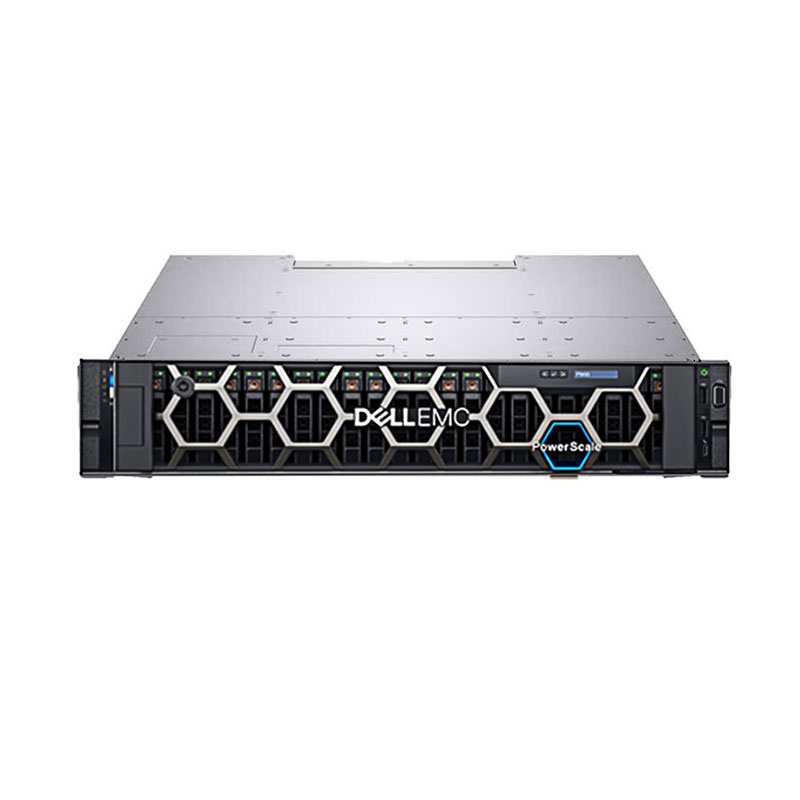
Check: Storage Server
What Are the Core Requirements for an NVMe‑oF Network Card?
RDMA support (RoCE v2 or iWARP) is mandatory to achieve sub‑10µs latency. Bandwidth must match the storage fabric: 100G for most flash arrays, 200G for AI‑scale fabrics. PCIe 4.0 x16 provides ~64 GB/s, sufficient for 100G/200G; PCIe 5.0 future‑proofs for 400G. Without a certified, high‑bandwidth NIC, NVMe‑oF cannot unlock full NVMe drive performance.
When Should You Choose 100G vs 200G for Your NVMe‑oF Fabric?
100G NICs (e.g., ConnectX‑6) are mature and cost‑effective for most enterprise storage. 200G advantages include lower per‑Gb cost at scale, support for GPU Direct RDMA with 8+ GPUs per node, and future‑proofing for 800G fabrics. Use 100G for virtualized environments and mid‑range arrays; choose 200G for AI training clusters and all‑NVMe data centers.
| Factor | 100G NIC | 200G NIC |
|---|---|---|
| Bandwidth per port | 100 Gb/s | 200 Gb/s |
| Typical latency (RoCE v2) | <5 µs | <5 µs |
| Cost per port (relative) | Lower | Higher, but lower per‑Gb |
| PCIe generation recommended | PCIe 4.0 x16 | PCIe 4.0 x16 or 5.0 x16 |
| Best workload fit | Virtualized storage, mixed workloads | AI training, HPC, GPU‑direct storage |
Which NIC Specifications Matter Most for NVMe‑oF Performance?
Protocol support is critical: RoCE v2 for lowest latency, iWARP for lossy networks. Packet processing offload (SmartNIC/DPU features) reduces CPU overhead — ConnectX‑7’s ASAP² offload helps in high‑throughput fabrics. Port count: dual‑port 100G often cheaper than single‑port 200G for redundancy. All NICs sourced from WECENT are original, with manufacturer firmware — critical for OEM server compatibility with Dell Gen14‑17, HPE Gen11, and Huawei FusionServer.
Check: Storage Server
Which NICs Are Compatible with Dell, HPE, and Huawei Servers?
The following certified NICs work with popular server platforms. WECENT supplies each with official OEM firmware for full compatibility.
- Dell PowerEdge R760xa / R750 / R660 (Gen14–17): NVIDIA Mellanox ConnectX‑6 Dx (100G), ConnectX‑7 (200G), Intel E810‑CQDA2
- HPE ProLiant DL380 Gen11 / DL560 Gen11: Broadcom NetXtreme‑E P2100G (200G), Intel E810‑2CQDA2
- Huawei FusionServer 2288H V7 / 2488H V7: NVIDIA ConnectX‑6 Dx (100G), Intel E810‑CQDA1
WECENT Expert Views: Our 8+ years of enterprise server experience allows us to validate NIC‑server compatibility before shipping – eliminating procurement risks. As an authorized agent for Dell, HPE, and Huawei, we source each NIC with the correct OEM part number and full manufacturer warranty.
How Does GPU Direct RDMA Enhance NVMe‑oF for AI Workloads?
GPU Direct RDMA allows GPUs to read/write directly to NVMe‑oF storage without CPU copying, reducing latency and boosting throughput. For servers with 8× H100/H200 GPUs (e.g., Dell XE9680), a 200G NIC avoids I/O bottlenecks. WECENT’s full GPU spectrum — from GeForce to Quadro to Tesla H/B series — plus NIC bundling enables turnkey AI storage solutions. A single training node with 8× H100 GPUs using two 200G ConnectX‑7 NICs can sustain 50 GB/s storage throughput, required for large model checkpointing.
What Are the Top NIC Models for 100G/200G NVMe‑oF?
| Model | Speed | RDMA Protocol | PCIe Gen | Server OEM Certification | Key Features |
|---|---|---|---|---|---|
| NVIDIA Mellanox ConnectX‑6 Dx | 100G | RoCE v2, iWARP | PCIe 4.0 x16 | Dell, HPE, Huawei | Low latency, hardware offload |
| NVIDIA Mellanox ConnectX‑7 | 200G/400G | RoCE v2, iWARP | PCIe 5.0 x16 | Dell, HPE, Huawei | ASAP² offload, GPU Direct |
| Intel E810‑CQDA2 | 100G | iWARP | PCIe 4.0 x16 | Dell, HPE, Huawei | Dynamic Device Personalization |
| Broadcom NetXtreme‑E P2100G | 200G | RoCE v2 | PCIe 5.0 x16 | HPE, Dell | TrueFlow telemetry |
WECENT stocks original, certified NICs — no grey market or counterfeit cards. OEM versions (e.g., Dell‑branded ConnectX‑7) are available for perfect firmware alignment.
Why Choose WECENT for Your NVMe‑oF NIC Procurement?
WECENT is an authorized agent for Dell, HPE, Huawei, Lenovo, and Cisco, ensuring every NIC comes with full manufacturer warranty and firmware support. With over 8 years of enterprise IT experience, WECENT’s engineers provide pre‑sales compatibility checks, installation guidance, and ongoing tech support. We cover Dell PowerEdge Gen14–17, HPE Gen11, and Huawei FusionServer V7 completely. GPU + NIC + server bundling is available for AI infrastructure (H100, H200, B200, B300 series). End‑to‑end services — from consultation to maintenance — are tailored for data centers and system integrators.
Conclusion
Selecting the right NIC for NVMe‑oF is not just about raw speed — it requires matching PCIe generation, RDMA protocol, and server OEM certification. For AI workloads, 200G NICs with GPU Direct RDMA are becoming essential. WECENT’s unique position as an authorized agent for Dell, HPE, Huawei, and others means you get verified compatibility, original hardware, and full warranty — eliminating the procurement guesswork. Whether you need 100G for cost‑efficient storage or 200G for next‑gen AI fabrics, WECENT provides the end‑to‑end expertise and hardware sourcing to make your NVMe‑oF deployment successful.
Frequently Asked Questions
Can I use a consumer GPU with NVMe‑oF via RDMA?
No – consumer GPUs (GeForce) lack GPU Direct RDMA support. For RDMA to NVMe‑oF, use NVIDIA H100/H200/B100‑B300 or Quadro professional GPUs. WECENT supplies both.
Do I need a 200G NIC if my NVMe drives only support 7 GB/s each?
Not for a single drive, but for aggregated bandwidth across multiple drives in a storage server, 200G provides headroom for concurrent GPU‑storage transfers. 100G is sufficient for most enterprise flash arrays.
Are Intel E810 NICs compatible with Dell PowerEdge Gen15 servers?
Yes, Intel E810‑CQDA2 is supported on Dell PowerEdge R660, R760, and newer generations. Always check the Dell HCL; WECENT can provide pre‑validated bundles.
What is the latency advantage of RoCE v2 over TCP for NVMe‑oF?
RoCE v2 can achieve <5µs latency with RDMA, while TCP‑based NVMe‑oF adds 20–50µs due to kernel overhead. For latency‑sensitive AI inference, RoCE v2 is recommended.
How does WECENT ensure NIC firmware matches the server OEM?
As an authorized agent, WECENT sources NICs with the correct OEM firmware (e.g., Dell‑branded ConnectX‑7 with Dell part number). This guarantees compatibility, support, and firmware updates from the server manufacturer.