

















Composable infrastructure storage is a disaggregated architecture where storage resources are pooled and allocated on-demand to compute nodes via a high-speed fabric like NVMe-oF. It decouples storage from servers, enabling flexible scaling and efficient utilization. This contrasts with traditional SAN/NAS, reducing stranded capacity and allowing data center operators to match storage performance exactly to workload needs.
Check: Storage Server
Why Should You Decouple Storage from Compute in Modern Data Centers?
The business case for disaggregation centers on resource silos. Traditional server-centric storage creates underutilized, stranded storage and forces over‑provisioning. Decoupling allows independent scaling of compute and storage based on workload demands—critical for AI training clusters where GPU nodes need burst storage performance while CPU‑heavy VMs require capacity.
Operational flexibility is a key benefit. With decoupled storage, IT teams can “compose” high‑performance NVMe pools for GPU servers running LLM training on NVIDIA H100 GPUs, then “decompose” and repurpose the same storage for virtualization workloads without hardware reconfiguration. Provisioning time drops from days to minutes.
Cost optimization through utilization improvements is substantial. A data center running mixed workloads (AI inference plus virtual desktops) can achieve 30‑40% better storage utilization with composable NVMe‑oF versus dedicated storage per server type.
| Dimension | Traditional SAN/NAS | Composable NVMe‑oF |
|---|---|---|
| Resource allocation | Static, per‑server | Dynamic, pool‑based |
| Scaling method | Forklift upgrades | Granular, on‑demand |
| Storage utilization | 50‑65% typical | 80‑95% achievable |
| Provisioning time | Days to weeks | Minutes |
| GPU storage access | Shared fabric, added latency | Direct RDMA, sub‑microsecond latency |
How Does Software-Defined NVMe-oF Enable Composable Architecture?
Software‑defined storage controllers (e.g., SPDK or proprietary solutions) separate the control plane from the data plane. The control plane handles namespace discovery, zoning, and provisioning, while the data plane delivers line‑rate NVMe performance over RoCE or Fibre Channel fabrics.
NVMe‑oF fabric options for enterprise include RoCEv2 (cost‑effective on existing Ethernet, supports 100/200/400GbE), Fibre Channel NVMe (32/64GFC for legacy compatibility), and InfiniBand (200/400Gbps HDR/NDR for HPC/AI clusters). WECENT supplies Dell PowerSwitch (RoCE‑optimized) and Cisco Nexus switches for both RoCE and Fibre Channel environments.
Composable infrastructure managers like Dell PowerEdge OpenManage Enterprise Modular (OMEM) or HPE OneView integrate with NVMe‑oF target services. They automate namespace provisioning, QoS policies, and rebalancing—transforming storage into a true composable resource alongside compute and GPU pools.
What Are the Key Benefits for AI, HPC, and Virtualization Workloads?
AI training acceleration is a prime benefit. With NVMe‑oF composable storage, GPU nodes (NVIDIA H100, H200, B300) pool multiple high‑speed NVMe SSDs across the fabric, eliminating local storage bottlenecks during checkpoint writes (100+ GB/s) and dataset loading. Reference architectures using Dell XE9680 (8x H100 GPUs) paired with disaggregated NVMe storage pools achieve up to 40% faster training iteration times.
HPC workload flexibility improves. Simulation checkpointing requires burst IOPS, while post‑processing visualization demands low latency. Composable NVMe‑oF allows dynamic reconfiguration of QoS and capacity per job queue, avoiding dedicated storage over‑provisioning for peak workloads.
Virtualization density increases. VMware vSphere 8+ and Hyper‑V support NVMe‑oF as a standard datastore protocol. Decoupled storage enables CPU/memory‑optimized hosts like Dell R760xa to access pooled NVMe performance without local SSDs, boosting VM density by 20‑30% and simplifying capacity planning.
WECENT Expert Views: “Our enterprise clients deploying AI clusters with Dell PowerEdge XE9680 servers and NVIDIA H100 GPUs consistently report that NVMe‑oF composable storage eliminates the ‘GPU starvation’ problem—where fast GPUs wait for slow storage. The key is selecting the right NVMe‑oF target controller and fabric switch. We help system integrators configure validated designs using Dell PowerVault ME5 as NVMe‑oF targets paired with HPE ProLiant DL360 Gen11 as compute nodes, ensuring all hardware is original and manufacturer‑warrantied.”
Which Dell PowerEdge and HPE ProLiant Servers Support NVMe-oF Natively?
Dell PowerEdge Gen14 through Gen17 models offer varied NVMe‑oF readiness. The flagship AI server XE9680 (Gen17, 8x H100/B200 GPUs) supports native NVMe‑oF initiator via Broadcom/Intel NICs with RDMA. The GPU‑optimized R760xa (Gen16) handles up to 4 double‑width GPUs and supports initiator/target roles with Dell PERC12 and PCIe Gen5. The AMD‑based R7625 (Gen16) supports initiator with QLogic FastLinQ adapters. XR series edge servers support NVMe‑oF over RoCE for edge AI inference.
HPE ProLiant Gen11 models like DL360 Gen11 (1U flexible initiator) and DL380 Gen11 (2U target capable) also support NVMe‑oF. HPE’s Composable Fabric Manager integrates with NVMe‑oF to automate storage pool assignment across ProLiant nodes.
Supported network adapters include Broadcom 57504 (25/100GbE), Mellanox ConnectX‑7 (200/400GbE, InfiniBand NDR), and Intel E810 (100GbE with RDMA). WECENT supplies these as original Dell, HPE, or third‑party options, all with manufacturer warranties.
| Model | Generation | GPU Max | NVMe‑oF Role | Fabric Options |
|---|---|---|---|---|
| XE9680 | Gen17 | 8x H100/B200 | Initiator | RoCEv2, InfiniBand |
| R760xa | Gen16 | 4x A100/L40S | Initiator/Target | RoCEv2, FC‑NVMe |
| R7625 | Gen16 (AMD) | 2x A100 | Initiator | RoCEv2 |
| XR8610t | Gen15 | 2x L4 | Initiator (edge) | RoCEv2 (25GbE) |
How Do You Integrate NVIDIA GPUs with a Disaggregated NVMe Storage Pool?
GPU‑direct storage access is achieved through NVMe‑oF plus GPU Direct Storage. NVIDIA GPUs (H100, H200, B300) read/write directly to remote NVMe namespaces over the fabric, bypassing CPU and system memory. This reduces data‑movement latency by 30‑50% for AI workloads and eliminates the CPU bottleneck during checkpoint operations.
Check: Storage Server
A reference configuration for AI training might include four Dell XE9680 compute nodes (each with 8x H100 80GB SXM), a Dell PowerVault ME5084 storage pool with 24 NVMe SSDs (30TB usable) as NVMe‑oF targets over 100GbE RoCE, and Dell PowerSwitch S5248F‑ON fabric (48x 25GbE + 8x 100GbE). Management via NVIDIA DGX Base Command with WECENT‑configured BIOS/iDRAC settings for initiator mode ensures immediate integration.
GPU tiering with composable storage allows multi‑tier policies. H200 GPU nodes get premium NVMe‑oF performance (1M+ IOPS) for active training data, while older GPUs (A100, L40S) access lower‑cost NVMe pools for model validation and inference—all within the same fabric without physical reconfiguration. WECENT helps enterprises design these tiered storage policies.
What Should Procurement Managers Consider When Sourcing for Composable Infrastructure?
Hardware compatibility is paramount. Not all NVMe storage solutions support NVMe‑oF target mode. Procurement must verify that server network adapters support RDMA (RoCEv2 or InfiniBand), that storage arrays expose NVMe namespaces as targets, and that fabric switches support lossless Ethernet for RoCE (PFC, ECN). Validated combinations include Dell XE9680, R760xa, HPE DL380 Gen11, and NVIDIA H100/B200—all tested in WECENT reference architectures.
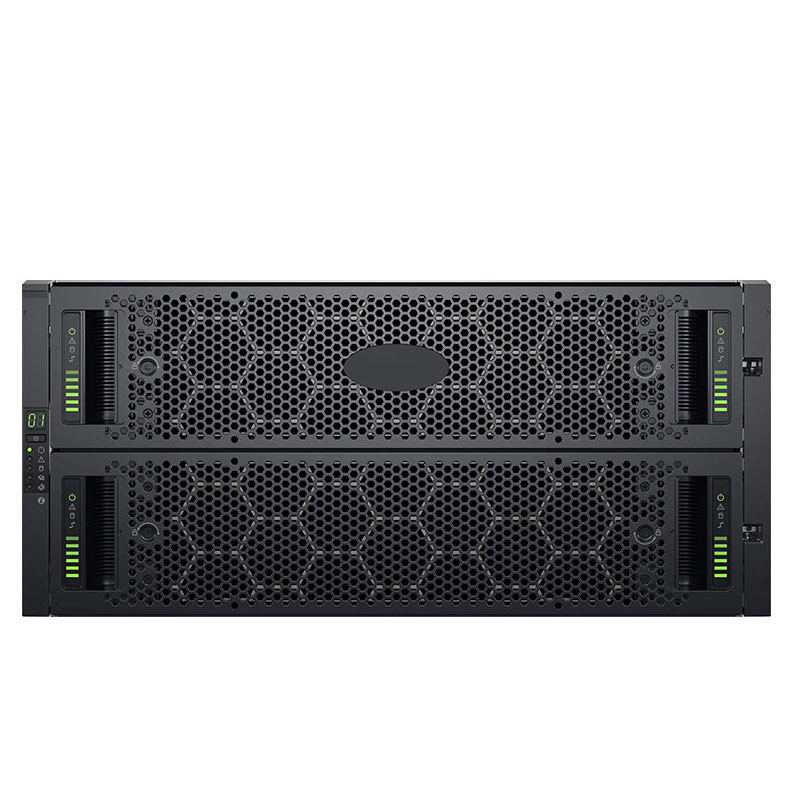
Original versus gray market considerations are critical. As an authorized agent for Dell, HPE, Cisco, H3C, and Huawei, WECENT guarantees original hardware—no refurbished or recycled components—backed by full manufacturer warranties (3‑5 years, next‑business‑day on‑site). Firmware and driver compliance with NVMe‑oF specifications is ensured, which is vital for RDMA stability. OEM customization is available for system integrators who require custom branding or pre‑configured NVMe‑oF settings.
Procurement flexibility for global buyers includes drop‑ship from WECENT’s China warehouse or direct from Dell/HPE factories, volume discounts for GPU server plus NVMe‑oF storage bundles, and OEM/whitelabel options for brand owners. With 8+ years of experience, WECENT exports compliant IT hardware worldwide to finance, education, healthcare, and data center clients.
How Does WECENT Support End-to-End Implementation from Consultation to Maintenance?
Pre‑sales technical consultation starts with workload analysis. WECENT’s certified engineers determine if composable NVMe‑oF delivers ROI for GPU training, HPC, or VDI workloads. They design reference architectures selecting optimal Dell PowerEdge or HPE ProLiant models, NVIDIA GPU SKUs, and fabric configuration. Parts selection uses guaranteed original sourcing, including NVMe SSDs (Samsung PM9A3, Kioxia CM7), RDMA adapters, and fiber/copper cables.
Deployment and integration services cover rack‑and‑stack, cabling, and initial NVMe‑oF fabric setup on Dell PowerSwitch, H3C, or Cisco gear. WECENT configures BIOS, iDRAC, or HPE OneView for initiator/target mode, creates storage pools, validates GPU topology (NVIDIA SXM baseboard plus namespace mapping), and tunes RoCE performance (PFC buffer, ECN thresholds per Dell best practices).
Ongoing lifecycle support includes firmware/kernel updates coordinated with manufacturer releases, RMA processing directly with Dell, HPE, or NVIDIA for original hardware, capacity planning for composable storage scale‑out (adding namespaces without downtime), and remote monitoring with incident response for critical AI infrastructure.
WECENT Expert Views: “As an authorized agent for Dell, HPE, and NVIDIA with over eight years in enterprise IT, we have seen composable infrastructure shift from ‘emerging trend’ to ‘production‑ready necessity’ for AI and HPC environments. Our clients benefit from single‑vendor accountability across Dell servers, HPE storage, and NVIDIA GPUs—all original, warranty‑backed hardware. Whether you are deploying a four‑node XE9680 cluster for LLM training or scaling GPU inference across 100+ nodes, WECENT provides the procurement expertise and technical validation to make NVMe‑oF composable storage work from day one.”
Conclusion
Software‑defined NVMe‑oF transforms enterprise data centers from rigid server‑storage pairs into flexible, composable infrastructure where compute, GPU, and storage resources are allocated independently based on real‑time workload demands. For AI training, HPC, and virtualization, this architecture eliminates stranded capacity, accelerates provisioning, and delivers the performance needed for modern workloads.
WECENT’s unique advantage lies in its authorized agent status for Dell (Gen14‑17), HPE (Gen11), and NVIDIA (GeForce RTX 5090 through H100/H200/B300). The company provides the complete composable stack from a single trusted partner. With 8+ years of enterprise experience, OEM customization options, and end‑to‑end services, WECENT ensures your NVMe‑oF deployment is both technically validated and procurement‑efficient—backed by original manufacturer warranties.
For IT procurement managers, system integrators, and data center operators evaluating composable infrastructure, WECENT offers free reference architecture reviews and hardware compatibility assessments. Contact WECENT at www.szwecent.com to discuss your Dell PowerEdge, HPE ProLiant, and NVIDIA GPU requirements for a software‑defined NVMe‑oF deployment.
FAQs
Q1: Can I use existing Dell PowerEdge Gen14 servers as NVMe‑oF initiators?
Some Gen14 models (R740, R740xd) support NVMe‑oF initiator with Broadcom 57414 25GbE adapters and firmware updates. However, Gen15+ (R750, XE8545) offer native RDMA support. WECENT can verify compatibility per configuration and supply retrofit adapter kits if needed.
Q2: Is NVMe‑oF composable storage compatible with NVIDIA H100 and B300 GPUs?
Yes. NVIDIA H100 (SXM and PCIe), H200, B100, B200, and B300 all support GPU Direct Storage over NVMe‑oF via ConnectX‑7 or ConnectX‑8 adapters. WECENT provides full reference architectures for these GPU SKUs paired with Dell XE9680 servers and disaggregated NVMe pools.
Q3: What is the typical ROI timeline for migrating from traditional SAN to composable NVMe‑oF?
Enterprises typically see ROI within 12‑18 months through 30‑40% reduction in storage hardware costs (eliminating over‑provisioning), 50‑60% faster GPU training job completion (reducing cloud GPU compute costs), and 80% lower provisioning overhead for new workloads. WECENT provides TCO analysis tools during consultation.
Q4: How does WECENT ensure all hardware is original and warranty‑compliant for international buyers?
As an authorized Dell, HPE, Huawei, Cisco, and H3C agent, WECENT sources directly from manufacturer supply chains. Every server, GPU, and component ships with original factory seals, manufacturer serial numbers, and full warranty registration. We provide customs‑compliant documentation for global logistics.