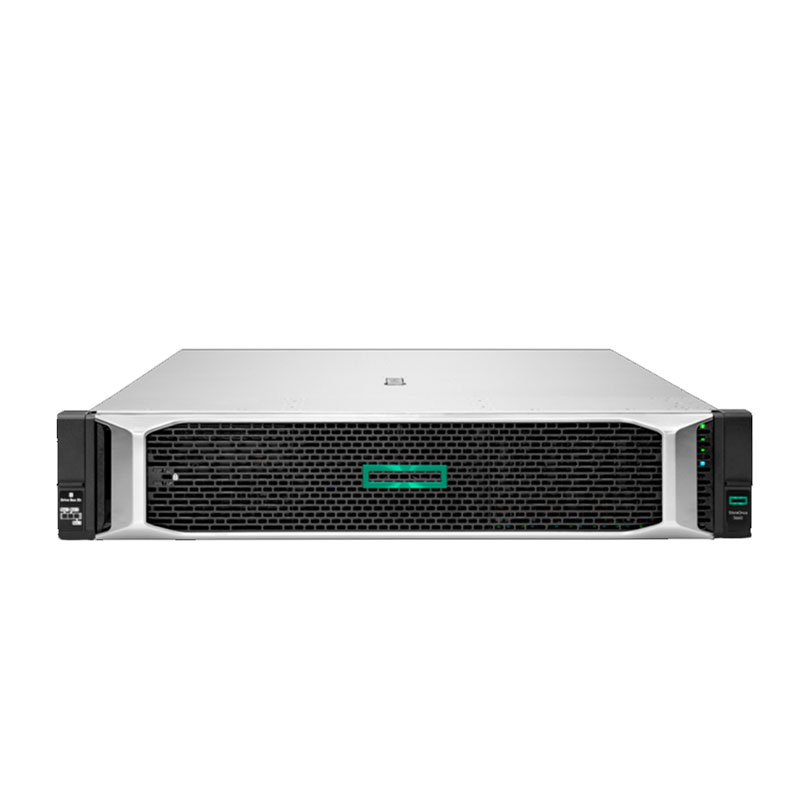
NVMe‑oF security encompasses authentication and encryption methods that protect data in transit across storage fabrics. In‑band authentication uses DH‑HMAC‑CHAP within the fabric itself, while out‑of‑band authentication relies on separate TLS or IPsec channels. Both ensure only authorised initiators access NVMe namespaces, preventing unauthorised data access in high‑speed enterprise environments.
Check: Storage Server
What is NVMe‑oF and why does it need security?
NVMe over Fabrics (NVMe‑oF) extends the NVMe protocol over networks such as Fibre Channel, Ethernet (RoCE, iWARP), and InfiniBand. High‑speed data transfers (up to 400 Gbps) make fabric snooping a realistic risk. Without security, an attacker on the fabric can intercept data or impersonate an initiator or controller. Authentication and encryption are mandated by the NVMe‑oF specification and increasingly by compliance regulations (PCI DSS, GDPR). WECENT’s 8+ years of enterprise server expertise confirm that most data center operators now require security as a baseline, especially for AI training workloads handling sensitive data.
How does in‑band authentication work for NVMe‑oF?
In‑band authentication uses the DH‑HMAC‑CHAP protocol (Diffie‑Hellman Hash‑based Message Authentication Code Challenge Handshake Authentication Protocol). It operates within the NVMe‑oF fabric itself, requiring no external authentication server. The host and controller mutually prove identity via a pre‑shared secret. A key exchange occurs over the command/data channel, and subsequent commands include a message authentication code to verify integrity. Performance impact is minimal because authentication is performed only at connection time. However, it does not provide data confidentiality – only authentication. For encryption, an additional layer (TLS or IPsec) is needed.
What is out‑of‑band authentication and when should you use it?
Out‑of‑band authentication relies on a separate security channel, typically TLS over TCP or IPsec for RDMA fabrics. Authentication and encryption are handled by the transport layer, independent of the NVMe‑oF protocol. Use cases include multi‑tenant environments where full data confidentiality is required, compliance with financial or healthcare data regulations, and deployments where the fabric must be protected from physical eavesdropping. The trade‑off is increased latency (especially with software‑based encryption) and more complex key management. Hardware offload (e.g., Intel QAT, NVIDIA BlueField DPU) can mitigate overhead – and WECENT supplies compatible servers and DPUs from Dell, HPE, and H3C.
Which encryption methods protect data in transit over NVMe‑oF fabrics?
TLS 1.3 is the recommended encryption for NVMe‑oF/TCP. It provides both authentication and confidentiality. Implementations are available on Dell PowerEdge Gen14–17 and HPE Gen11 servers. IPsec is used for RDMA fabrics (RoCE, iWARP). It encrypts the entire packet, but adds header overhead. Hardware acceleration via NVIDIA BlueField‑3 DPU or Intel QAT reduces performance penalties. The table below shows approximate latency and throughput overhead for each method. WECENT can help select the optimal combination based on workload (e.g., AI training vs. general storage).
| Method | Authentication | Data Confidentiality | Latency Overhead (µs) | Throughput Impact | Hardware Acceleration Available |
|---|---|---|---|---|---|
| DH‑HMAC‑CHAP (in‑band) | Yes | No | < 5 µs (connection only) | Negligible | No (on‑chip) |
| TLS 1.3 (out‑of‑band) | Yes | Yes | 10–30 µs per packet | 5–15% | Intel QAT, NVIDIA DPU |
| IPsec (out‑of‑band) | Yes | Yes | 20–80 µs per packet | 8–25% | NVIDIA BlueField, Cisco ASIC |
What hardware supports NVMe‑oF security features from top brands?
Leading vendors now integrate NVMe‑oF security in their platforms. Dell PowerEdge servers (Gen14–17, e.g., R7625, XE9680) support in‑band DH‑HMAC‑CHAP and out‑of‑band TLS. HPE ProLiant Gen11 with iSCSI and NVMe‑oF controllers also include hardware‑accelerated IPsec. Network switches from Cisco (Nexus 9000 Series) and H3C (S6850/S9850 Series) support RoCE v2 with IPsec offload, enabling encrypted RDMA without CPU overhead. The table below lists specific models compatible with secure NVMe‑oF deployment, all available as original units from WECENT (authorized agent for Dell, HPE, Cisco, H3C).
Check: Storage Server
| Category | Brand | Model | Security Features Supported | Notes |
|---|---|---|---|---|
| Server | Dell | PowerEdge R7625 | DH‑HMAC‑CHAP, TLS 1.3 | AMD EPYC; good for storage |
| Server | Dell | PowerEdge XE9680 | DH‑HMAC‑CHAP, IPsec offload | Optimized for AI (NVIDIA H100/B200) |
| Server | HPE | ProLiant DL380 Gen11 | TLS 1.3, IPsec (with Intel QAT) | Intel Xeon Scalable |
| Switch | Cisco | Nexus 93180YC‑FX3 | RoCE v2 + IPsec | 100 GbE, low latency |
| Switch | H3C | S9850‑32H | RoCE v2 + IPsec | 400 GbE, suitable for AI fabrics |
| DPU | NVIDIA | BlueField‑3 B3220 | IPsec, TLS offload | Integrates with Dell/HPE servers |
WECENT can supply the entire stack (servers, switches, GPUs, cables) as a single‑source partner, ensuring compatibility and original warranties.
How does NVMe‑oF security impact performance for AI workloads?
AI training workloads (NVIDIA H100, H200, B100, B200, B300) rely on high‑bandwidth, low‑latency storage access. In‑band authentication adds negligible overhead because it is only performed at connection setup. Encryption (TLS or IPsec) does add latency, but with hardware offload the impact can be held under 5%. WECENT’s experience shows that many AI data center operators choose in‑band authentication for private fabrics and add encryption only for data crossing network boundaries. For clusters using NVIDIA DGX or Dell XE9680 with B200 GPUs, the recommended approach is DH‑HMAC‑CHAP + IPsec offloaded to a BlueField DPU. WECENT provides pre‑configured reference architectures that combine Dell PowerEdge servers, H3C switches, and NVIDIA GPUs – all tested for secure NVMe‑oF performance.
What are the best practices for deploying secure NVMe‑oF in enterprise data centers?
First, determine compliance requirements (PCI DSS, HIPAA, GDPR) – these often mandate encryption. For internal clusters, in‑band authentication may suffice. Second, use a secure key store (e.g., hardware security module) for pre‑shared secrets in DH‑HMAC‑CHAP. For TLS, deploy a proper CA infrastructure. Third, always benchmark with representative workloads. WECENT’s technical team can provide stress‑test results for specific Dell/HPE configurations and recommend switch QoS settings to minimise jitter.
WECENT Expert Views
“From our 8+ years of delivering enterprise server solutions, we see that NVMe‑oF security is no longer a ‘nice‑to‑have’ – it is a baseline requirement for any modern data center handling sensitive data. In‑band authentication provides a lightweight first line of defence that works well for private fabrics, while out‑of‑band encryption is essential for multi‑tenant and regulated environments. At WECENT, we help IT procurement managers balance performance and security by selecting the right combination of Dell PowerEdge servers, HPE ProLiant systems, Cisco or H3C switches, and NVIDIA DPUs – all backed by manufacturer warranties. Our turnkey approach ensures that your NVMe‑oF fabric is both secure and optimised for your specific workloads, whether that is AI training, virtualisation, or high‑performance storage.”
Why choose WECENT as your partner for secure NVMe‑oF infrastructure?
WECENT is an authorized agent for Dell, Huawei, HP, Lenovo, Cisco, and H3C – guaranteeing original products with full manufacturer warranties. No gray‑market risk. With 8+ years of enterprise server expertise covering the complete Dell PowerEdge Gen14–17 line, latest AI GPUs (H100, H200, H800, B100, B200, B300), and a full spectrum of GPUs from GeForce consumer to Tesla/H/B data center, we deliver end‑to‑end services: consultation, product selection, installation, maintenance, and ongoing support. WECENT can deliver a turnkey secure NVMe‑oF fabric – servers, switches, GPUs, and authentication/encryption hardware – as a single‑source partner.
FAQ
What is the difference between in‑band and out‑of‑band authentication?
In‑band authentication (DH‑HMAC‑CHAP) occurs within the NVMe‑oF fabric itself using pre‑shared secrets. It authenticates but does not encrypt. Out‑of‑band authentication uses a separate channel (TLS or IPsec) to provide both authentication and full data encryption.
Does NVMe‑oF security require specialized hardware?
Basic in‑band authentication runs on any NVMe‑oF controller. For out‑of‑band encryption with minimal performance loss, hardware offload (Intel QAT, NVIDIA BlueField DPU, or switch‑based IPsec) is recommended. WECENT can supply these components from Dell, HPE, Cisco, and H3C.
How do I configure DH‑HMAC‑CHAP on Dell PowerEdge servers?
Configuration is done via the Dell iDRAC or the NVMe‑oF subsystem software (e.g., Dell OpenManage). A pre‑shared key must be generated and stored on both initiator and target. WECENT can provide step‑by‑step guides for Dell Gen16/17 models.
Can I use NVMe‑oF security with existing storage networks?
Yes, provided the storage controllers and switches support the required protocols. Many legacy deployments upgrade to secure fabrics by adding NVMe‑oF gateways or replacing switches. WECENT offers migration services to minimise downtime.
What is the cost implication of enabling NVMe‑oF security?
In‑band authentication adds negligible hardware cost. Out‑of‑band encryption may require DPUs or capable switches, increasing upfront investment but reducing compliance risk. WECENT provides TCO comparisons to help procurement managers budget.
Conclusion
Implementing NVMe‑oF security is no longer optional – it is a necessity for protecting high‑speed storage data in enterprise and AI environments. In‑band authentication (DH‑HMAC‑CHAP) offers a performance‑friendly first line of defence, while out‑of‑band encryption (TLS or IPsec) satisfies compliance and multi‑tenant requirements. With WECENT as your authorised partner, you gain access to original, warranty‑backed hardware from Dell, HPE, Cisco, and H3C, along with the expertise to design and deploy a secure fabric that balances performance and protection. Whether you need a single server or a complete 400 Gbps AI cluster, WECENT’s end‑to‑end services ensure your NVMe‑oF infrastructure is both secure and reliable.