

















FC-NVMe and RoCE both enable NVMe-oF but differ fundamentally in transport. FC-NVMe uses native Fibre Channel with dedicated hardware, delivering deterministic sub-10μs latency and zero packet loss – ideal for mission-critical SAN environments. RoCE runs on standard Ethernet with RDMA, achieving similar latency but requiring lossless network configuration (PFC/DCB) and adding jitter under congestion. Your choice depends on existing infrastructure, workload criticality, and GPU cluster integration needs.
Check: Storage Server
What Are the Core Technical Differences Between FC-NVMe and RoCE?
FC-NVMe uses native Fibre Channel transport (FC-NVMe-INIT/TARGET) while RoCE implements RDMA over Converged Ethernet (v1/v2). FC-NVMe delivers deterministic 5–10μs end-to-end latency; RoCE offers 5–15μs but with jitter risk from PFC pause frames. Fibre Channel employs credit-based flow control for zero packet loss, whereas RoCE relies on Priority Flow Control and ECN, which can introduce complexity under congestion.
| Attribute | FC-NVMe | RoCE |
|---|---|---|
| Transport medium | Dedicated Fibre Channel | Shared Ethernet |
| Typical latency (μs) | 5–10 | 5–15 (variable) |
| Packet loss | Zero (credit-based) | Requires PFC/DCB |
| Hardware cost | Higher (specialized HBAs/switches) | Lower (commodity Ethernet) |
| Management maturity | Mature SAN tools | Emerging DCB configuration |
Which Transport Delivers Better Real-World Performance for GPU-Accelerated AI Workloads?
FC-NVMe’s deterministic latency minimizes GPU idle time during LLM training, preventing NVLink/PCIe stalls. In field experience at WECENT, FC-NVMe sustains 90%+ GPU utilization with Dell PowerEdge R760xa + H200 GPUs under mixed workloads, while RoCE averages 82–88% due to jitter-induced throughput variation. RoCE scales better for disaggregated storage, but FC-NVMe outperforms in 8+ GPU node configurations common in AI clusters.
How Do Total Cost of Ownership (TCO) Profiles Differ for Enterprise Deployments?
FC HBAs cost $800–1,200 versus RoCE NICs at $300–600; Fibre Channel switches are 2–3x the price of equivalent Ethernet switches. However, if you already operate FC SAN infrastructure, FC-NVMe preserves that investment. RoCE leverages existing 25/100GbE networks but requires new DCB skills training, adding operational overhead. FC-NVMe storage administration overhead is roughly 30% lower because SAN teams need no retraining. Three-year TCO models from WECENT show FC-NVMe breakeven at 50+ host connections with existing FC gear.
What Does a Multi-Vendor Deployment Look Like for FC-NVMe vs RoCE?
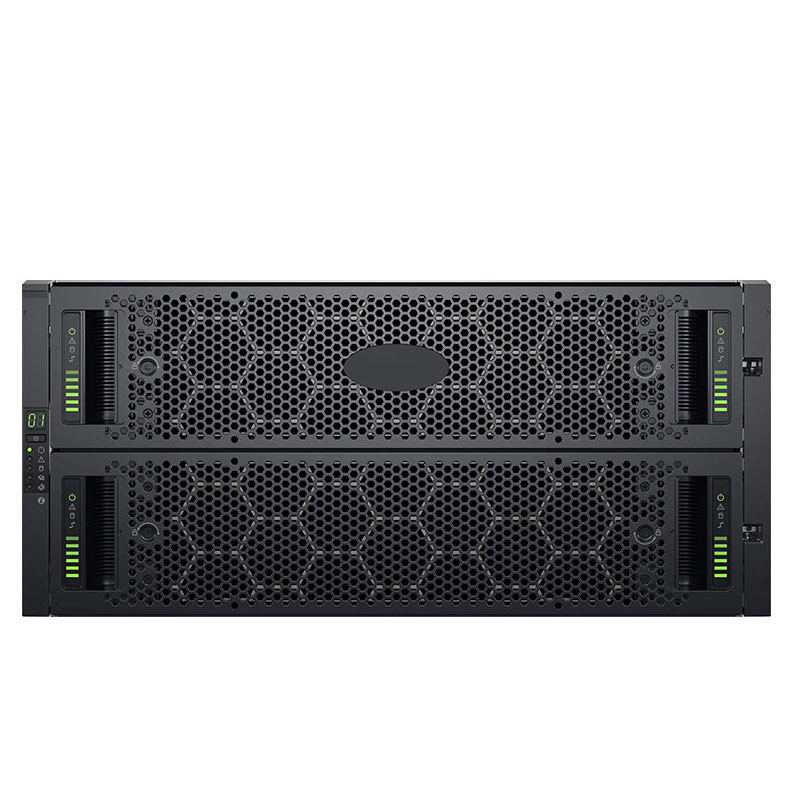
For FC-NVMe, a typical stack includes Dell PowerEdge R760 Gen 16 server, Marvell QLogic 28xx FC HBA, Brocade G720 switch, and Dell PowerStore/ME5 array. For RoCE, HPE ProLiant DL380 Gen11 with Mellanox ConnectX-7 NIC, Cisco Nexus 93180YC-FX3 switch, and HPE Alletra storage is common. WECENT offers single-point sourcing for all components – servers (Dell, HPE, Huawei), switches (Cisco, H3C), storage, and cabling – with pre-validated configurations to guarantee interoperability.
Check: Storage Server
WECENT Expert Views: Our integration teams have deployed 50+ NVMe-oF solutions across both transports. For AI clients running H100/H200 clusters, we typically recommend FC-NVMe for latency-critical training nodes and RoCE for inference servers that benefit from Ethernet flexibility. We pre-validate all combinations in our Shenzhen lab before shipping – including Gen 14–17 PowerEdge compatibility. This hands-on experience ensures you get the right transport for your workload mix without costly trial and error.
Which Vendor Ecosystems Best Support Each Transport Option?
FC-NVMe is backed by Brocade (Broadcom) switches, Marvell/Cavium HBAs, Dell EMC PowerStore/Unity XT, and HPE Primera/Nimble – all production-grade with 5+ years of maturity. RoCE relies on Cisco Nexus 9000/3000, H3C S6850/S9850, Mellanox/Nvidia Spectrum switches, and Dell PowerSwitch – rapid innovation but firmware version sensitivity. As an authorized agent for Dell, HPE, Cisco, and H3C, WECENT provides direct access to firmware updates, compatibility matrices, and warranty support critical for NVMe-oF stability.
How Should IT Procurement Managers Evaluate Migration from Existing SAN Infrastructure?
In greenfield data centers, RoCE offers 20–30% lower initial investment. For brownfield sites with existing FC SANs, FC-NVMe preserves $100k+ in switch and HBA investment. Segment workloads: mission-critical databases and financial transactions belong on FC-NVMe; AI inferencing, VDI, and container storage suit RoCE. WECENT’s three-year TCO analysis tool helps procurement managers quantify breakeven points based on host count and existing infrastructure.
What Is the Future Roadmap for NVMe-oF Transports Through 2025-2026?
FC-NVMe will benefit from Gen 7 Fibre Channel (64GFC) doubling throughput, plus NVMe-TCP integration and improved GPU direct access. RoCE evolution includes RoCE v3 standardization and Ultra Ethernet Consortium efforts driving 800GbE lossless enhancements specifically for AI. WECENT is already stocking Gen 14–17 servers with FC-NVMe and RoCE pre-configured options, and validating B100/B200/B300 GPU nodes for both transports – ensuring you can adopt whichever technology matures fastest.
Frequently Asked Questions
Which transport is better for AI training clusters with H100 GPUs?
FC-NVMe generally wins for sustained GPU utilization (90%+ vs 82–88%). However, for mixed training/inference clusters, RoCE’s flexibility often justifies the 5–10% throughput trade-off. WECENT recommends site-specific benchmarking.
Can I mix FC-NVMe and RoCE in the same data center?
Yes – many enterprise deployments use FC-NVMe for primary storage and RoCE for secondary tiers or GPU clusters. WECENT regularly configures dual-transport Dell PowerEdge arrays with separate network paths.
Does WECENT provide warranties for both FC-NVMe and RoCE components?
Yes. As authorized agents for Dell, HPE, Cisco, and H3C, all components carry original manufacturer warranties. WECENT also provides extended service options including on-site replacement.
What are the minimum network requirements for RoCE deployment?
RoCE v2 requires 25/50/100GbE switches with DCB support (PFC, ECN, DCBX). Cisco Nexus 9000 and H3C S6850 series are commonly recommended. WECENT pre-configures all RoCE switches before shipping.
How long does it take to deploy a fully validated NVMe-oF solution from WECENT?
Standard configurations ship within 5–10 business days. Custom deployments (including Dell PowerEdge Gen 16/17 + GPU integration) typically require 2–3 weeks for factory validation.
Conclusion
The FC-NVMe vs RoCE decision ultimately comes down to workload priority and existing infrastructure. FC-NVMe delivers unmatched determinism for mission-critical storage, while RoCE offers cost-effective flexibility for GPU-centric AI workloads. Neither is universally superior – the right choice depends on your latency requirements, team expertise, and budget constraints.
WECENT’s unique position as an authorized multi-vendor agent means you get unbiased guidance across both transports, backed by real deployment experience with Dell PowerEdge (Gen 14–17), HPE ProLiant, Cisco/H3C switches, and the full GPU spectrum from consumer to B300 data center accelerators. Whether you need FC-NVMe for financial trading systems or RoCE for H100 AI clusters, WECENT delivers original, warranty-backed hardware with end-to-end support – consultation, configuration, installation, and ongoing maintenance.
Contact WECENT for a free architecture review and TCO analysis tailored to your infrastructure.