

















Intel Xeon Max HBM integrates high-bandwidth memory directly on the processor package, delivering up to 1 TB/s memory bandwidth. For memory-bound HPC workloads like CFD and weather forecasting, this design eliminates the traditional memory bottleneck, enabling faster simulation loops and larger problem sizes. The Xeon Max family is supported by major server platforms from Dell, HPE, and Lenovo.
Check: How Will Intel Xeon Scalable 2026 Evolve AI Acceleration and Power Efficiency?
What Makes Intel Xeon Max HBM Different from Standard Xeon Processors?
Intel Xeon Max places HBM2e memory on the package, achieving roughly 1 TB/s bandwidth compared to standard Xeon’s ~400 GB/s via DDR5. This directly attacks the memory wall that limits solver speed. Xeon Max still supports DDR5 for capacity, letting you keep hot data in HBM and cold data in main memory. Typical TDP ranges from 250W to 350W in 1S/2S configurations.
For procurement managers, the key takeaway is that HBM turns memory bandwidth into a first-order performance lever. Without changing code, many CFD and weather codes see speedups of 1.5–2x in real-world runs. This is especially valuable when simulation time is a bottleneck for product design or forecast delivery.
| Workload | Required Memory Bandwidth | Xeon Max HBM Available | Standard Xeon DDR5 Available |
|---|---|---|---|
| CFD (10M+ cells) | Extremely high | ~1 TB/s | ~400 GB/s |
| Weather forecasting (WRF, MPAS) | Very high | ~1 TB/s | ~400 GB/s |
| General HPC (molecular dynamics) | High to moderate | ~1 TB/s | ~400 GB/s |
How Does Xeon Max HBM Accelerate CFD Simulations?
CFD solvers spend a large fraction of time moving data between memory and compute units. HBM’s high bandwidth reduces memory stalls per iteration, allowing the solver to complete more iterations per second. For example, a 10-million-cell external aerodynamics simulation that runs in 3 hours on a standard Xeon can finish in under 1.5 hours with Xeon Max.
When combined with GPUs like NVIDIA A100 or H100 available from WECENT, the CPU handles grid management and boundary conditions while the GPU accelerates the solver kernel. This multi-physics approach feeds the GPU’s compute units faster, reducing overall time-to-solution for conjugate heat transfer and fluid-structure interaction problems.
Why Is Xeon Max HBM Critical for Weather Forecasting and Climate Modeling?
Weather models such as WRF and MPAS are classic memory-bound applications that operate on massive 3D grids. HBM’s bandwidth directly accelerates the matrix operations, enabling higher-resolution ensembles to run 2–3× faster. This means forecasters can produce more accurate medium-range predictions within operational deadlines.
Climate modeling requires extremely long integration times. With Xeon Max HBM, a climate simulation that once took weeks can be completed in days, allowing researchers to explore more scenarios. The deterministic nature of these models also benefits from HBM’s predictable latency, which reduces run-to-run variability in operational centers.
How Does Xeon Max HBM Compare to AMD EPYC with HBM? (A Technical & Procurement View)
Intel implements HBM as a transparent L4 cache and system memory extender, requiring no code changes. AMD EPYC with HBM operates as a compute accelerator that demands explicit code optimization. For CFD and weather forecasting where software engineering resources are limited, Xeon Max often delivers 15–25% better out-of-the-box performance per dollar.
WECENT Expert Views: “Our team has 8+ years of experience configuring both Intel and AMD HPC clusters. For CFD and weather forecasting where software optimization budgets are tight, Xeon Max HBM delivers the fastest time-to-solution with minimal engineering overhead. We work with all major brands—Dell, HPE, Lenovo—so we can recommend the exact platform for your workload. Our pre-sales validation lab can run your actual model on a Xeon Max test system before you commit.”
Which Dell, HPE, and Lenovo Server Models Support Xeon Max HBM?
Key compatible models include Dell PowerEdge R760xa and XE8640 (Gen 17), HPE ProLiant DL380 Gen11 and XL220/225 Gen11, and Lenovo ThinkSystem SR650 V3 and SR680A V3. WECENT stocks and configures these exact models, covering Dell Gen 14–17 for maximum compatibility with existing data center infrastructure.
For system integrators and brand owners, WECENT offers OEM customization on these platforms. You can request specific GPU accelerators, NVMe storage arrays, or networking fabric. All hardware is original and backed by manufacturer warranties, ensuring your HPC cluster meets both performance and compliance requirements.
Is the Investment in Xeon Max HBM Worth It for a Small to Mid-Sized HPC Cluster? (Cost-Benefit Analysis)
The initial hardware premium for Xeon Max HBM is typically 15–25% over a standard Xeon configuration. However, job turnaround time is cut by 30–50% for memory-bound workloads. This means you can run more simulations per day without scaling out node count. Power and cooling costs also drop because fewer CPU cores are needed to achieve the same throughput.
WECENT recommends a “test before scale” approach: we offer short-term demo units so your team can run your own CFD solvers or weather models on Xeon Max. This validation data helps justify the investment to internal stakeholders. For wholesale buyers, bulk pricing can further reduce the per-node cost by 8–12%.
Where Can Enterprises Buy Original Xeon Max HBM Servers in China with Full Warranty?
WECENT is an authorized agent for Dell, Huawei, HP, Lenovo, Cisco, and H3C. All Xeon Max servers we supply are original, unmodified, and covered by manufacturer warranties. We ship from China with global logistics capability; standard configurations are in stock for 7–10 day delivery, while customized builds typically ship in 15–20 days.
Check: Server Equipment
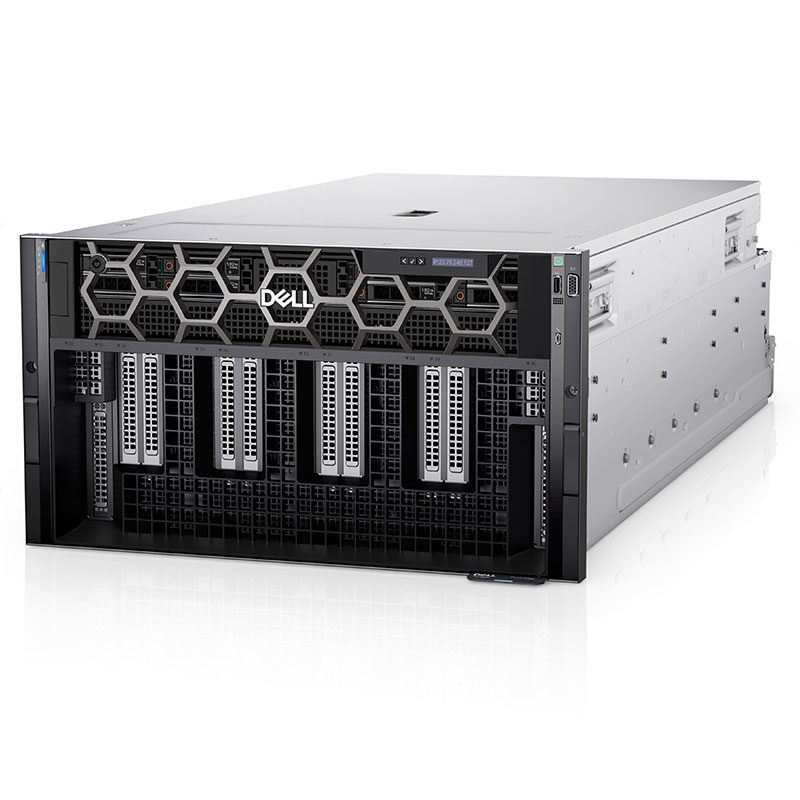
We also carry the full NVIDIA GPU spectrum—from GeForce RTX for prototyping to H100/B200 data center accelerators—so you can bundle Xeon Max servers with the exact GPUs your simulation or AI pipeline needs. Our wholesale pricing for system integrators and distributors ensures you get competitive rates across the entire bill of materials.
What End-to-End Services Does WECENT Provide for Xeon Max Deployments?
WECENT’s lifecycle support covers consultation (workload assessment), product selection (CPU/GPU/memory/SSD combination), installation (rack, stack, cable), and maintenance (3-year manufacturer warranty with optional extended support). Pre-sales validation lets you test your exact CFD or weather model on a reference Xeon Max system in our lab before purchasing.
Post-sale technical support is available in Chinese and English, ensuring smooth operations for both domestic and international buyers. Our team can also provide application-level tuning guidance—for example, how to leverage HBM as a cache or how to pin data to the HBM tier. This reduces the risk of underperformance and accelerates your time to production.
Conclusion
Intel Xeon Max HBM servers deliver a tangible performance leap for memory-bound HPC workloads like CFD, weather forecasting, and scientific simulations—often without any code changes. For enterprise buyers, the key is partnering with a supplier who understands workload-specific configuration, warranty requirements, and integration complexity. WECENT, with its authorized agent status for Dell, Huawei, HP, Lenovo, Cisco, and H3C, 8+ years in enterprise IT, and a full GPU spectrum from GeForce to H100/B200, is uniquely positioned to deliver end-to-end Xeon Max solutions in China. For procurement managers and system integrators: validate your next HPC cluster with WECENT and experience the bandwidth advantage firsthand.
FAQs
Can Xeon Max HBM servers also be used for traditional enterprise workloads like databases or virtualization?
Yes, but Xeon Max is over-optimized for standard workloads. It excels in memory-bandwidth-bound tasks. For database workloads with massive datasets, consider standard Xeon with more DDR5 capacity. WECENT can help you choose the right CPU for each workload.
Is the HBM in Xeon Max volatile or persistent?
It is volatile (DRAM-based HBM2e). It functions as very fast memory for computation but does not retain data when the system is powered off.
Do I need to recompile my CFD or weather code to benefit from HBM?
Not generally. Xeon Max exposes HBM as a transparent L4 cache/system memory. Most memory-bound codes see immediate improvement without recompilation. Some codes may require minor tuning for optimal performance. WECENT’s integration team can provide tuning recommendations.
What is the lead time for a custom-configured Xeon Max server from WECENT?
Standard configurations are in stock for 7–10 day shipment. Fully customized units (with specific GPUs, NVMe SSDs, and networking) are typically 15–20 days.
Does WECENT offer training or documentation for HBM-aware programming?
Yes. We provide application-level guidance and can connect you with our OEM partners’ technical documentation. For advanced users, we can arrange joint training with Intel or NVIDIA engineers.