

















For data center operators choosing between Dell PowerEdge R760 (1U) and R660 (2U) 16th Gen servers, select R760 for high-density inference and virtualization with up to 4x H100/H200 GPUs and optimized cooling in space-constrained racks. Opt for R660 for scalable AI/HPC training with up to 8x A100/B200 GPUs, advanced high-load cooling, and greater expandability. WECENT, as an authorized Dell agent, provides original units with customization and manufacturer warranties.
Check: Server Equipment
What Are the Core Specifications of Dell PowerEdge R760 and R660?
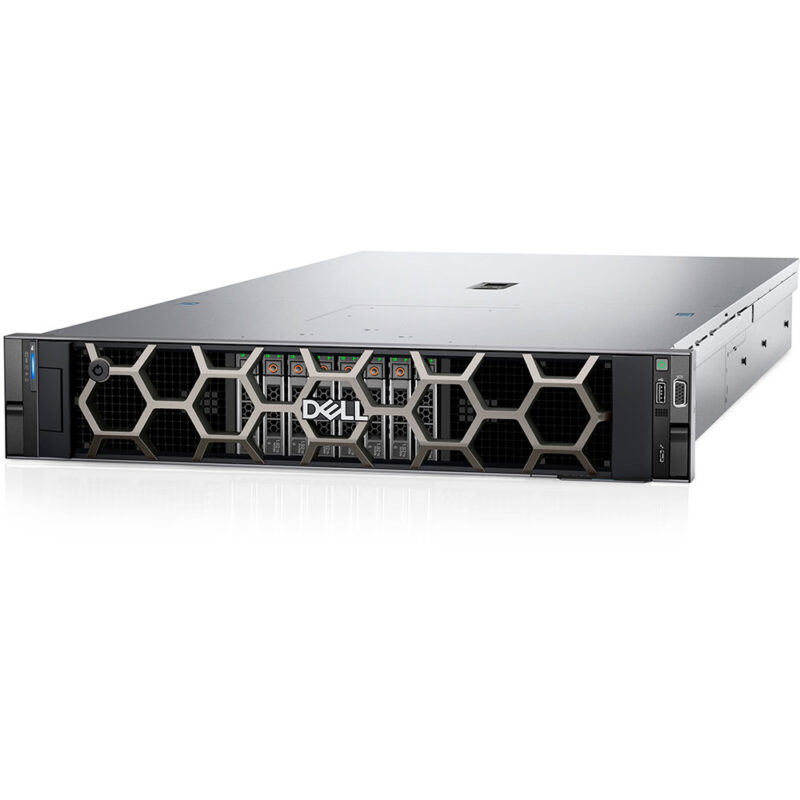
Both the Dell PowerEdge R760 and R660 represent 16th Generation enterprise servers built on dual Intel Xeon Scalable processors (Xeon 6 series). They support up to 6TB of DDR5 memory and feature PCIe Gen5 connectivity, making them suitable for enterprise data center workloads including cloud infrastructure, big data analytics, and AI applications. The R760, a 1U form factor, delivers compact density for tight rack environments, while the R660, a 2U design, provides expanded internal bays for storage-intensive deployments. These architectural differences significantly influence storage capacity: the R760 supports up to 12x 2.5-inch NVMe drives, whereas the R660 accommodates up to 24x drives, enabling greater data throughput for analytics and backup operations.
| Specification | Dell PowerEdge R760 | Dell PowerEdge R660 |
|---|---|---|
| Form Factor | 1U Rack | 2U Rack |
| Processors | Dual Intel Xeon 6 (up to 60 cores) | Dual Intel Xeon 6 (up to 60 cores) |
| Memory | Up to 6TB DDR5 | Up to 6TB DDR5 |
| Storage Drives | Up to 12x 2.5″ NVMe | Up to 24x 2.5″ NVMe |
| PCIe Gen | Gen5 | Gen5 |
| GPU Support | Up to 4x double-width GPUs | Up to 8x GPUs |
| Ideal Use Cases | Virtualization, Dense Inference | AI Training, Large-Scale Analytics |
How Does 1U R760 Compare to 2U R660 in GPU Support?
GPU capacity differs substantially between these two platforms, directly impacting AI and HPC workload suitability. The Dell PowerEdge R760, constrained by its 1U form factor, accommodates up to 4x double-width GPUs—such as NVIDIA H100, H200, or B200 accelerators—ideal for dense AI inference, virtualization, and containerized workloads where per-server compute efficiency matters. The R660, with its expanded 2U chassis, supports up to 8x GPUs, enabling deployment of NVIDIA A100, B100, or B300 accelerators for large-scale model training and HPC simulations. For organizations deploying H-series or B-series data center GPUs, WECENT provides complete GPU spectrum availability, from consumer GeForce RTX 50 series down to professional Quadro RTX and data center Tesla/H/B series, with OEM customization for system integrators and wholesalers pairing accelerators with Dell servers at scale.
Which Server Offers Better Cooling for High-Load Data Centers?
Thermal management differs critically between 1U and 2U architectures. The R760’s compact 1U design leverages direct liquid cooling options combined with high-velocity fan arrays, capable of handling GPUs with thermal design power (TDP) up to 1600W efficiently in hot-aisle environments. This approach maximizes cooling density in retrofit or colocation scenarios where rack space is premium. The R660’s 2U chassis enables rear-to-front airflow with increased fan heatsink surface area and redundant cooling paths, supporting extreme GPU densities—such as 8x B300 accelerators—without thermal throttling in demanding AI training clusters. Data center operators should deploy R760 in edge facilities or cooler regional hubs; reserve R660 for centralized high-TDP training farms. WECENT’s installation and maintenance services optimize cooling configurations based on your facility’s ambient conditions, power budget, and workload profile.
How Do R760 and R660 Scale in Enterprise Deployments?
WECENT Expert Views: With over 8 years of enterprise server specialization and authorized Dell Gen14-17 coverage, WECENT observes that R760 excels in financial services and education data centers requiring space optimization—achieving up to 42 units per 42U rack for virtualization and cloud workloads. The R660 prioritizes per-node expandability, with additional PCIe slots and NIC density ideal for healthcare and big data operators scaling GPU-heavy analytics clusters horizontally. As supply chain disruptions persist globally, WECENT mitigates procurement risk by offering original, warranty-backed hardware paired with consultation, system architecture design, and ongoing technical support—eliminating gray-market exposure for wholesalers, integrators, and DC operators worldwide.
Scalability strategies diverge based on deployment model. The R760’s 1U footprint maximizes node density within fixed rack space, supporting up to 42 servers per 42U rack—critical for colocation environments or enterprises with frozen data center footprints. Each R760 achieves high per-socket throughput via PCIe Gen5 and DDR5, delivering sufficient compute for virtualization hypervisors (VMware, KVM) and containerized inference workloads. The R660 prioritizes horizontal scaling by increasing per-node GPU capacity and I/O: operators deploy fewer R660 units while distributing workloads across 8x accelerators, reducing inter-node latency and cluster management overhead for large-scale AI training or scientific simulations. Financial institutions favor R760 for branch-office virtualization; healthcare networks choose R660 for federated AI analytics across clinical data lakes. WECENT’s OEM and customization services enable system integrators to tailor CPU, GPU, and storage configurations for each deployment pattern, ensuring alignment with workload SLAs and budget constraints.
Check: WECENT Server Equipment Supplier
What Makes These 16th Gen Servers Ideal for AI and Cloud Workloads?
Both platforms embed capabilities native to modern AI and cloud infrastructure. PCIe Gen5 support accelerates GPU-to-memory bandwidth, reducing latency for large language model (LLM) inference and training phases. Dual Intel Xeon 6 processors deliver 60+ cores per node, enabling efficient batch processing and multi-tenant isolation within containerized environments. DDR5 memory—up to 6TB per server—accommodates in-memory databases, vector stores for retrieval-augmented generation (RAG), and intermediate training checkpoints without disk spillover. For R760 deployments, pair H200 or B200 accelerators with Kubernetes clusters to orchestrate stateless inference services, maximizing cost-per-inference across financial transaction processing or real-time recommendation engines. For R660 clusters, combine A100 or B300 GPUs with distributed training frameworks (PyTorch, TensorFlow) to enable multi-node model optimization for enterprise LLM fine-tuning and generative AI applications. WECENT stocks all GPU tiers—consumer RTX 50/40 series, professional Quadro RTX, and data center H100/H200/B100-B300 series—enabling seamless hardware-software integration for enterprises transitioning AI workloads from experimental to production.
How Do R760 and R660 Impact Data Center TCO and Density?
Total cost of ownership (TCO) and physical density represent competing priorities in data center planning. The R760 minimizes racks-per-square-foot footprint, critical for colocation, cloud service providers, and enterprises in expensive urban hubs: deploying 42 R760 units per rack generates significantly higher compute density than fewer R660 nodes. Power consumption per R760 averages lower than R660 due to 1U constraints, reducing cooling overhead—particularly valuable in locked power budgets. However, the R660’s 8x GPU capacity concentrates training workloads onto fewer nodes, reducing network switch port consumption, hypervisor licensing costs, and management complexity. Organizations with dedicated AI clusters benefit from R660’s lower per-inference-request network costs; enterprises balancing mixed virtualization and analytics favor R760’s density. WECENT’s flexible pricing, authorized warranty programs, and end-to-end support—from consultation through maintenance—further optimize TCO by eliminating supply chain friction, accelerating deployment timelines, and ensuring hardware longevity.
| Factor | R760 (1U, Density-Focused) | R660 (2U, Scalability-Focused) |
|---|---|---|
| Rack Density | Up to 42 servers/42U rack | Up to 21 servers/42U rack |
| GPU Slots Per Node | 4x double-width | 8x single/double-width |
| Storage Drives | 12x 2.5″ NVMe | 24x 2.5″ NVMe |
| Power per Server (Est.) | 800–1200W base | 1000–1400W base |
| Ideal Cluster Model | High-node-count, low-per-node GPU | Low-node-count, high-per-node GPU |
| Network Switch Ports | 42 ports/rack needed | 21 ports/rack needed |
Why Choose WECENT for Dell PowerEdge R760 and R660 Procurement?
WECENT operates as an authorized agent for Dell, HPE, Lenovo, Huawei, Cisco, and H3C, ensuring all hardware is original, certified, and backed by manufacturer warranties. Over 8+ years, WECENT has specialized exclusively in enterprise server and IT infrastructure solutions, serving finance, education, healthcare, and data center operators globally. As a China-based supplier, WECENT mitigates geopolitical supply chain risks, offering competitive pricing and rapid deployment timelines for wholesalers, system integrators, and enterprise procurement teams. Full lifecycle services—consultation, product selection, system architecture design, testing, installation, and ongoing maintenance—reduce time-to-production and operational overhead. WECENT provides immediate availability of both R760 and R660 paired with AI GPUs (H100, H200, B100-B300 series), OEM and ODM customization for brand owners, and white-label options for resellers entering new markets. Global shipping, local technical support, and warranty claim facilitation eliminate deployment risks inherent to gray-market procurement.
Conclusion
Choosing between Dell PowerEdge R760 and R660 hinges on workload architecture, facility constraints, and growth trajectory. Select R760 for 1U density in virtualization-heavy data centers, branch offices, and colocation environments where space premium justifies higher node counts and lower per-server compute. Choose R660 for centralized AI/HPC clusters, federated analytics platforms, and organizations planning sustained GPU-intensive workloads where per-node GPU capacity and storage expandability outweigh rack density requirements. Both servers deliver enterprise-grade reliability, PCIe Gen5 performance, and DDR5 memory capacity; the decision ultimately reflects organizational topology and cost optimization strategy. Partner with WECENT—an authorized Dell distributor with genuine hardware, end-to-end support, and custom GPU/CPU configurations—to deploy infrastructure without supply chain delays or warranty ambiguity. Contact WECENT today for tailored recommendations, competitive quotes, and deployment support aligned with your data center roadmap.
Frequently Asked Questions
What is the maximum GPU support in Dell PowerEdge R760 compared to R660?
The R760 accommodates up to 4x double-width GPUs (such as NVIDIA H100 or H200), while the R660 supports up to 8x GPUs (A100, B100, B300), enabling significantly higher GPU density for large-scale training and analytics workloads.
Which Dell server has better cooling for high-TDP GPU deployments?
The R660’s 2U chassis provides superior cooling for sustained high-TDP GPU clusters through expanded heatsinks and redundant airflow paths, while the R760 optimizes 1U thermal performance via liquid cooling and high-velocity fans for dense inference environments.
Are Dell R760 and R660 available with full manufacturer warranties from WECENT?
Yes, WECENT supplies original Dell R760 and R660 servers with complete manufacturer warranties, global technical support, and compliance certifications, eliminating procurement risks associated with gray-market or refurbished hardware.
Can I customize R760 or R660 configurations for specific AI workloads?
Absolutely. WECENT offers comprehensive OEM and ODM services, including custom GPU/CPU configurations, storage tiering, and network customization, tailored for system integrators, wholesalers, and enterprise data center operators scaling AI infrastructure.
Which server—R760 or R660—should I choose for dense virtualization versus scalable AI training?
Deploy R760 for dense virtualization and inference in space-constrained racks (up to 42 units per 42U); choose R660 for scalable AI training clusters prioritizing per-node GPU capacity and storage expandability over rack density.