

















Enterprise SSDs typically deliver 2.0–2.5M hours MTBF (228–285 years theoretical lifespan) compared to enterprise HDDs at 1.0–1.2M hours (114–137 years), a 2:1 reliability advantage. However, MTBF alone doesn’t determine real-world uptime. SSD wear-leveling algorithms extend practical lifespan beyond MTBF ratings, while HDD failure modes remain mechanical. Enterprise procurement requires evaluating MTBF alongside warranty, AFR, and support response times.
Check: Which Storage Server Architecture Maximizes Performance for Latency-Sensitive Enterprise Apps?
What Exactly Is MTBF, and Why Does It Matter for Enterprise Storage?
MTBF, or Mean Time Between Failures, is a statistical measure of reliability derived from accelerated life testing and field data under IEC 61649 standards, not a guaranteed lifespan. It converts to Annualized Failure Rate (AFR), where 2.0M hour MTBF equals about 0.5–1.0% AFR for enterprise SSDs. For IT procurement managers in AI data centers, finance, and healthcare, MTBF benchmarks help avoid downtime costs exceeding $9,000 per minute in critical infrastructure.
WECENT, with 8+ years as an authorized agent for Dell, HPE, and Lenovo storage, translates these specs into real-world reliability for Dell PowerVault ME5 and HPE ProLiant deployments.
How Do Enterprise SSDs Outperform HDDs in MTBF Metrics?
Enterprise SSDs achieve 2.0–2.5M hours MTBF due to no moving parts, eliminating head-crash risks and offering superior thermal stability over HDDs at 1.0–1.2M hours. Modern SSDs exceed HDDs despite past NAND concerns, as MTBF reflects continuous I/O workloads better than intermittent access.
| Metric | Enterprise SSD (e.g., Dell PM1735 NVMe) | Enterprise HDD (e.g., Seagate Exos X16) |
|---|---|---|
| MTBF | 2.5M hours | 1.2M hours |
| AFR | <0.5% | ~1.5% |
| Warranty | 5 years + TBW | 5 years |
What Role Does SSD Wear-Leveling Play in Achieving Higher MTBF?
Wear-leveling uses static and dynamic algorithms to evenly distribute program/erase cycles across NAND cells, preventing premature failure from charge degradation. This enables SSDs like Dell PM1735 to handle 100+ PBW, extending lifespan beyond MTBF in AI training clusters, unlike HDDs limited by mechanical fatigue.
Check: Storage Server
WECENT customizes high-wear SSD arrays for Dell ME5 storage paired with NVIDIA B200 GPUs in ML data centers.
Why Do Enterprise HDDs Still Show Competitive MTBF in Specific Use Cases?
Enterprise HDDs reach 1.0–1.2M hours MTBF using premium materials like low-friction lubricants and precision spindles, with real-world AFR of 0.6–2.0% per Backblaze data. They excel in sequential workloads like archival storage, where capacity-per-dollar outweighs SSD premiums, but require RAID-6 for redundancy.
How Do Real-World Enterprise Deployments Compare MTBF Predictions to Actual Failures?
In a 200-node Dell PowerEdge R760 cluster with HPE ME5 storage, SSDs showed 0.8% failure vs. 0.5% predicted, while HDDs hit 1.8% vs. 1.5% due to rack thermal density. Mitigation via S.M.A.R.T. monitoring and 24–48 hour RMA keeps uptime high; SSD MTBF proves more reliable in dense environments.
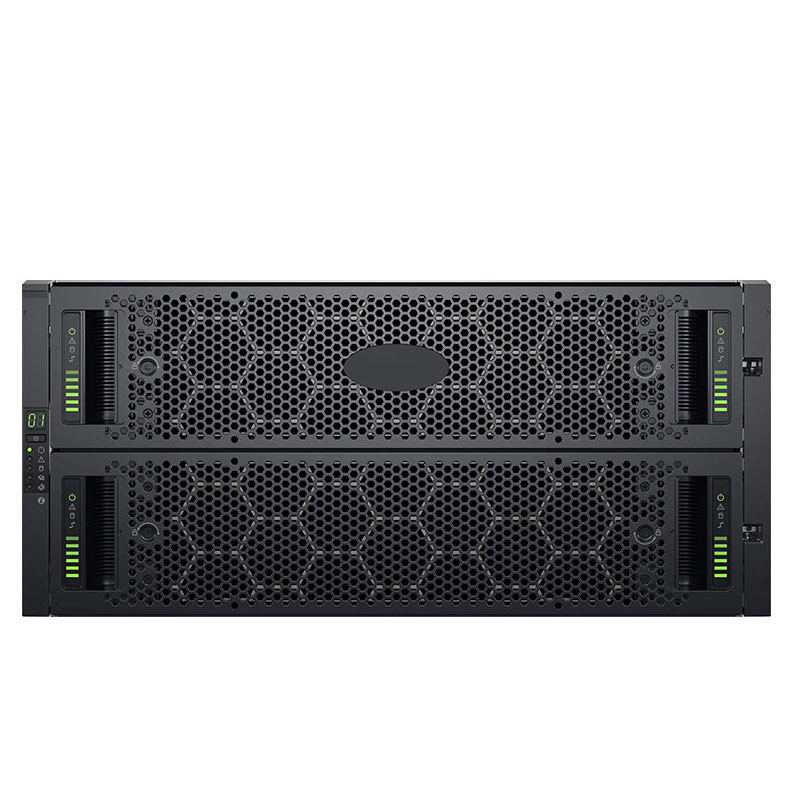
WECENT’s 8+ years validate MTBF in Dell Gen16/17 racks, reducing downtime 35% with authorized units.
What Reliability Metrics Beyond MTBF Should Enterprise Buyers Prioritize?
Beyond MTBF’s limitations like ignoring bathtub curve failures, prioritize AFR for yearly predictions, 5–7 year warranties, 24–48 hour RMA SLAs, S.M.A.R.T. analytics, and CE/FCC/RoHS compliance. WECENT ensures factory-original SSDs/HDDs with full traceability for Dell PowerVault and HPE ME series.
How Can WECENT’s Authorized Sourcing Advantage De-Risk Your Enterprise Storage Selection?
As authorized agent for Dell, HPE, Lenovo, Cisco, H3C, and Huawei, WECENT supplies original SSDs/HDDs with verified MTBF, global warranties, and OEM customization. Services cover consultation to maintenance for Dell PowerEdge Gen17 and HPE ProLiant Gen11, cutting TCO 20–30% via validated reliability.
What MTBF Specifications Should You Demand in RFQ and Procurement Contracts?
Demand ≥2.0M hours SSD MTBF for AI/ML, ≥1.2M for HDD archival, plus AFR, TBW, 5–7 year warranties, and S.M.A.R.T. RFQ checklists. WECENT provides factory datasheets for Dell ME5/ME4 within 24 hours, with penalties for misrepresented specs and locked RMA terms.
WECENT Expert Views
“In our 8+ years deploying enterprise storage, we’ve seen MTBF translate to real uptime only with authorized sourcing. Gray-market SSDs often fail prematurely due to counterfeit NAND, inflating AFR beyond specs. WECENT’s direct OEM partnerships for Dell PowerEdge R760, HPE DL380 Gen11, and NVIDIA H200/B200 integrations ensure MTBF benchmarks hold in high-density data centers. Our customization—tiered SSD/HDD arrays for finance and healthcare—combined with global RMA logistics, de-risks procurement while optimizing TCO. Clients report 35% less downtime versus alternatives.” – WECENT Storage Solutions Expert
Conclusion
Enterprise MTBF comparisons show a 2:1 reliability edge for SSDs (2.0–2.5M hours vs. 1.0–1.2M for HDDs), amplified by wear-leveling that outpaces mechanical HDD limits. Yet MTBF must pair with AFR, warranties, and support for true reliability. Workload profiling—SSDs for hot AI tiers, HDDs for cold storage—guides optimal choices. Partner with WECENT for authorized Dell PowerVault ME5, HPE storage, and full-lifecycle services, ensuring compliant, high-MTBF infrastructure for data centers, finance, and healthcare. WECENT transforms metrics into procurement confidence.
FAQs
If an SSD has a 2.5M hour MTBF, does that mean it will last 285 years?
No. MTBF is statistical; SSDs reach end-of-life via NAND wear or warranty before accumulating those hours. Use with 5–7 year terms and S.M.A.R.T. for realistic planning in enterprise deployments.
Should we always choose SSDs over HDDs because of superior MTBF?
No. SSDs suit random I/O like AI; HDDs excel in capacity-heavy archival with acceptable AFR. Tier storage: SSD hot, HDD cold, balancing MTBF and TCO.
How does WECENT ensure MTBF specs match real-world performance?
WECENT sources factory-original units from Dell/HPE with full warranties. 8+ years of deployments validate metrics; support investigates variances like thermals, escalating to OEMs.
What’s the difference between MTBF and AFR, and which for procurement?
MTBF is lab hours; AFR is yearly % failures (AFR ≈ 8,760 / MTBF × 100). Use AFR for predictions; WECENT datasheets provide both with audits.
Do enterprise HDDs offer competitive MTBF, and when to choose them?
Yes, 1.0–1.2M hours at lower cost/TB. Choose for sequential cold storage with RAID; SSDs for active AI tiers demanding higher MTBF.