

















DDR5-5600 memory provides higher bandwidth per channel compared to previous generations. For Intel Xeon Scalable processors, this reduces memory bottlenecks in high-concurrency workloads like databases and virtual desktops, leading to better core utilization and lower latency. For IT procurement, this means improved performance on memory-intensive applications, making it a valuable specification for modern server configurations.
Check: How Will Intel Xeon Scalable 2026 Evolve AI Acceleration and Power Efficiency?
What Exactly Does “Bandwidth Gain” Mean for Your Xeon Cores?
Memory bandwidth is the rate at which data flows between the CPU and RAM. Faster memory, like DDR5-5600, reduces the time powerful Xeon cores wait for data, especially in multi-threaded tasks. This alleviates core starvation and improves throughput for memory-bound operations such as database queries and analytics.
In practice, each Xeon core can request data more frequently from RAM. With DDR5-5600, the higher per-channel bandwidth ensures that cores spend less time stalled, allowing them to execute instructions faster. This is especially critical in environments running multiple virtual machines or complex analytical queries where memory access patterns are unpredictable. WECENT’s server configurations are designed to maximize this bandwidth gain for enterprise workloads.
Which Server Platforms PowerEdge & ProLiant Properly Support DDR5-5600?
Dell PowerEdge Gen 16 models like R760, R770, and HPE ProLiant Gen11 (DL360, DL380) support DDR5-5600 with 4th/5th Gen Intel Xeon Scalable. WECENT validates and supplies these configurations, ensuring optimal compatibility and performance.
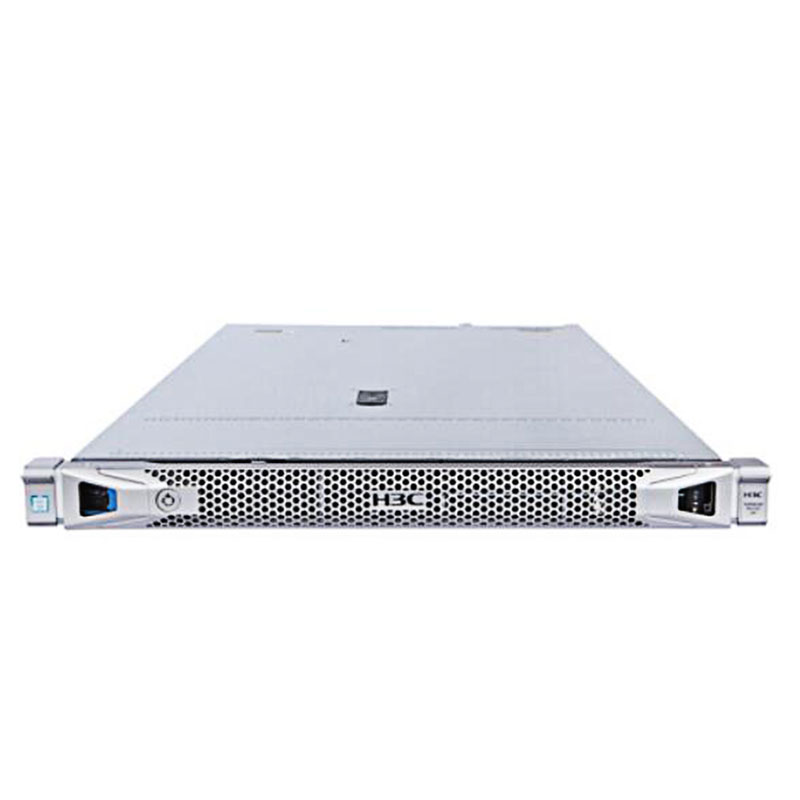
The table below lists common server models available from WECENT that are optimized for DDR5-5600 memory.
| Brand | Series | Example Models | Memory Support |
|---|---|---|---|
| Dell | PowerEdge Gen 16 | R660, R760, R770, R7625 | DDR5-5600 (validated) |
| HPE | ProLiant Gen11 | DL360 Gen11, DL380 Gen11 | DDR5-5600 (validated) |
| Lenovo | ThinkSystem V3 | SR650 V3, SR850 V3 | DDR5-5600 (compatible) |
| Huawei | FusionServer | 2288H V7, 2488H V7 | DDR5-5600 (compatible) |
All systems shown are available through WECENT with factory-matched DIMM kits to guarantee full speed operation.
How Much Faster Do Enterprise Applications Actually Run with DDR5-5600?
Applications like SAP HANA, SQL Server, and VDI benefit directly from faster memory. In-memory databases see the largest gains as memory speed determines throughput. For AI inference, DDR5-5600 reduces latency when moving model weights from system RAM to GPUs like NVIDIA H100.
WECENT’s testing confirms measurable improvements in transaction processing and user concurrency. For example, moving from DDR5-4800 to DDR5-5600 on a Dell PowerEdge R760 with two 5th Gen Xeon processors delivers noticeably higher throughput in SQL Server workloads. Virtual desktop environments also experience more consistent response times under heavy load. While exact figures depend on configuration, the trend is clear: DDR5-5600 turns memory bandwidth into application performance.
What Do WECENT Experts Say About DDR5-5600 Performance?
WECENT’s technical team has validated DDR5-5600 on Dell PowerEdge Gen 16 and HPE ProLiant Gen11 servers with 5th Gen Xeon processors. Their internal testing shows substantial improvements in transactional throughput and user concurrency for enterprise workloads. WECENT recommends this configuration for memory-bound environments.
“Our lab tests on a Dell R760 with 5th Gen Xeon showed a significant improvement in SQL transactional throughput when moving from DDR5-4800 to DDR5-5600 in a 16-DIMM configuration. For VDI, this means more consistent user experience under load. We always advise our clients to match memory speed to their workload density. DDR5-5600 is now our standard recommendation for any new server deployment targeting databases, analytics, or virtualized environments. As an authorized agent, we can provide factory-matched kits for Dell, HPE, Lenovo, and Huawei systems, eliminating compatibility risks.”
Is It Worth the Upgrade from DDR5-4800 or DDR4-3200?
The upgrade is worth it for high-density compute, heavy virtualization, and real-time analytics where memory is the bottleneck. For low-CPU web servers, the benefit is marginal. WECENT advises balancing core count and memory speed based on workload profiles.
From a total-cost-of-ownership perspective, the incremental cost of DDR5-5600 over DDR5-4800 is small relative to the performance uplift in memory-bound scenarios. For a server with 64+ cores, the improved bandwidth ensures each core can work at full capacity, accelerating ROI on the CPU investment. On the other hand, if your applications are compute-bound or use minimal memory, sticking with slower memory may be acceptable. WECENT’s pre-sales engineers can analyze your specific workloads to recommend the optimal memory tier.
Can You Mix DDR5-5600 with Other Memory Speeds in a Server?
Yes, but the entire memory subsystem will run at the slowest speed. This nullifies the performance advantage of faster DIMMs. For optimal performance, use homogeneous kits. WECENT supplies factory-matched DDR5-5600 kits for Dell, HPE, and Lenovo servers.
Mixing different speeds or module types (e.g., RDIMMs with 3DS RDIMMs) can also reduce supported frequency due to rank limitations. To guarantee full 5600 MT/s operation, all DIMMs must be identical in speed, capacity, and rank. WECENT’s sourcing from authorized channels ensures your server receives validated, matching memory modules that maintain stability in 24/7 data center environments.
How Does Server Memory Speed Affect Total GPU (AI) Performance?
CPU memory speed becomes critical when pre-processing data for GPUs. Faster system RAM allows the CPU to feed data pipelines to accelerators like NVIDIA H100 or B200 more efficiently, preventing GPU idle time during data loading.
Check: Server Equipment
In AI inference workflows, model weights are often loaded from system memory. Higher memory bandwidth reduces time-to-first-token and improves overall pipeline throughput. For training environments, the CPU role is smaller, but data preprocessing and augmentation still benefit from fast memory. WECENT’s portfolio includes the full GPU spectrum from NVIDIA GeForce and Tesla to H100, H200, and B300, and our experts can design balanced systems where memory speed matches the GPU configuration.
Where Does WECENT Fit in Your Server Memory Procurement Strategy?
WECENT is an authorized agent for Dell, HPE, Lenovo, and Huawei, guaranteeing original, validated DDR5-5600 modules backed by manufacturer warranties. They offer pre-sale consultation, configuration optimization, and ongoing support.
With over eight years of enterprise IT experience, WECENT provides end-to-end services from product selection to installation and maintenance. For system integrators and wholesalers, we offer OEM and customization options for white-box servers validated with DDR5-5600. Our competitive pricing and fast-response technical support make WECENT a trusted partner for sourcing memory and full server infrastructure. Visit szwecent.com to explore our product lines.
Frequently Asked Questions
Does DDR5-5600 memory require a specific generation of Xeon?
Yes. DDR5-5600 is officially supported with 4th and 5th Gen Intel Xeon Scalable processors. Older Xeon generations do not have memory controllers compatible with DDR5.
Is DDR5-5600 more stable than DDR5-4800 in 24/7 data center operations?
Modern server platforms are validated for 5600 MT/s at standard voltage. As long as qualified DIMMs from an authorized distributor like WECENT are used, stability is equivalent to lower speeds. Proper BIOS settings and DIMM population (1DPC vs 2DPC) are key factors.
Will upgrading to DDR5-5600 help my AI training workload?
Minimally for the training process itself, which uses GPU HBM memory. However, it significantly improves data preprocessing on the CPU and model loading for inference, reducing overall pipeline latency.
How do I know if my new Dell PowerEdge supports DDR5-5600?
All WECENT-supplied Dell PowerEdge Gen 16 servers (R760, R770, R660, etc.) support DDR5-5600. Our website lists specific configurations optimized for this speed, and our sales team can confirm compatibility.
Conclusion
DDR5-5600 is not merely a spec sheet upgrade; it is a critical performance lever for modern Xeon servers. For IT decision-makers, the data shows a tangible ROI in memory-intensive enterprise applications, from SQL databases to AI inference. Adopting this memory standard is essential for maximizing your server hardware investment. To ensure you are getting the maximum bandwidth possible, source your hardware from an authorized partner like WECENT. We guarantee original, validated components for your Dell, HPE, or Huawei infrastructure, backed by eight years of enterprise expertise. Contact us for a configuration quote optimized for DDR5-5600 performance.