

















Intel Xeon E-cores (efficiency cores) are specialized cores in Intel’s hybrid server architecture that handle background tasks and cloud-native workloads with dramatically lower power consumption than traditional P-cores. By maximizing performance per watt, they improve the overall power-to-performance ratio, reducing energy costs and cooling requirements in data centers. This makes them ideal for scalable, multi-threaded applications and Kubernetes environments where energy efficiency is critical.
Check: How Will Intel Xeon Scalable 2026 Evolve AI Acceleration and Power Efficiency?
What Is Intel’s Hybrid Server Architecture and How Do E-Cores Work?
Intel’s hybrid architecture combines high-performance P‑cores with energy-efficient E‑cores on a single Xeon die. Originally introduced in client CPUs, this design now extends to server processors. E‑cores handle background tasks, microservices, and scalable cloud-native applications, freeing P‑cores for latency-sensitive workloads. Intel Thread Director intelligently schedules threads across the core mix in Linux and Windows Server environments, optimizing power and performance dynamically.
How Do Intel Xeon E-Cores Compare to P-Cores and AMD EPYC in Power Efficiency?
Intel Xeon E‑cores offer lower clock speeds and IPC than P‑cores but deliver significantly better performance per watt for cloud-native tasks. AMD EPYC’s Zen 4C cores (e.g., Bergamo) use a dense homogeneous design. Intel’s hybrid approach provides a different trade‑off: higher core count per socket with E‑cores, while P‑cores handle bursty, single-thread-intensive work. Real-world benchmarks show E‑cores excel in container orchestration, web serving, and stateless applications.
| Core Type | TDP (Typical) | Performance per Watt | Best for Workloads |
|---|---|---|---|
| Intel Xeon P‑core | 250–350 W | High per-core, moderate per watt | Latency-sensitive, HPC, DB |
| Intel Xeon E‑core | 150–200 W | Very high per watt | Cloud-native, microservices, CI/CD |
| AMD EPYC (Zen 4C) | 200–320 W | High per watt (dense cores) | Homogenous multi-threaded workloads |
Which Cloud-Native Workloads Benefit Most from Intel E-Cores?
E‑cores are ideal for web serving, microservices, CI/CD pipelines, stateless application containers, and edge AI inference. They increase Kubernetes node density by handling sidecar proxies, logging, and monitoring containers, leaving P‑cores for compute‑intensive tasks. Workloads like high‑frequency trading or real‑time video transcoding still require P‑cores. A balanced server design mixes both core types to maximize throughput and efficiency.
Check: Server Equipment
How Can Intel E-Cores Reduce Total Cost of Ownership (TCO) for Data Centers?
Direct OpEx savings come from lower power bills, reduced cooling load, and higher rack density (more cores per kWh). Indirect savings include longer server life due to lower thermal stress, fewer replacements, and improved PUE. Over three years, an E‑core‑heavy server can cut total ownership costs by up to 30% compared to a pure P‑core server at equivalent throughput, depending on workload mix.
| Cost Category | E‑Core Server (256‑core equiv.) | P‑Core Server (256‑core equiv.) |
|---|---|---|
| Hardware Cost | Moderate (lower per‑core price) | Higher (fewer cores per watt) |
| Power Cost (3 yr) | Lower | Higher |
| Cooling Cost (3 yr) | Lower | Higher |
| Maintenance | Similar | Similar |
| Total 3‑Year TCO | Up to 30% lower | Baseline |
What Dell PowerEdge and HPE ProLiant Servers Feature Intel Xeon E-Cores?
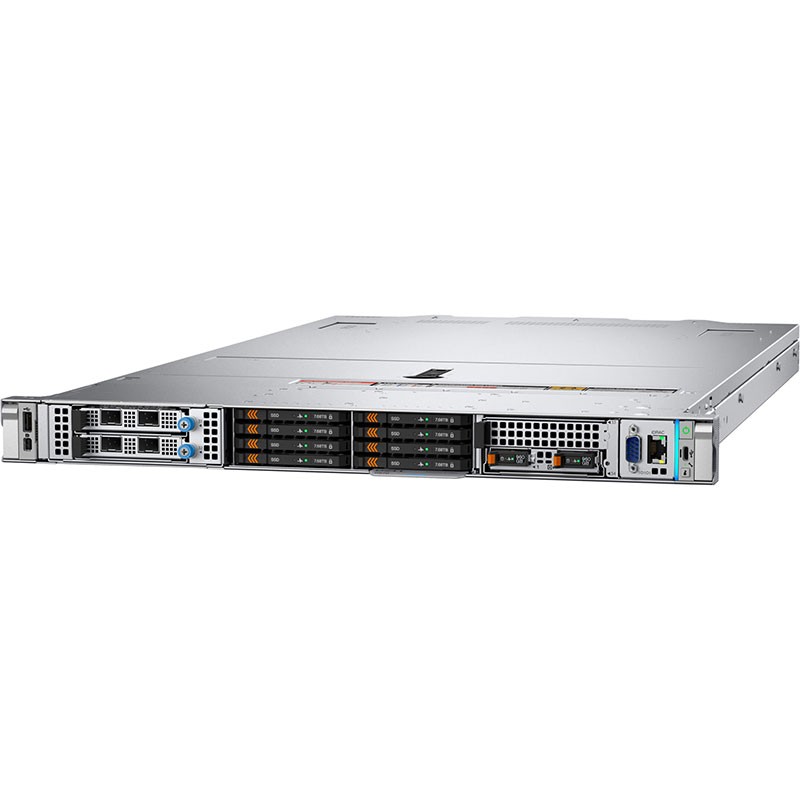
Current Dell PowerEdge Gen 17 models such as the R470, R570, R670, and R770 support Intel Xeon E‑core SKUs. HPE ProLiant Gen11 and Gen12 servers (e.g., DL360 Gen11, DL380 Gen11) also offer E‑core configurations. Both platforms support dual‑ or single‑socket designs, ample memory channels, and PCIe slots for GPUs and storage. WECENT, as an authorized agent for Dell and HPE, covers the full Dell PowerEdge Gen 14–17 range and can pre‑configure servers with the latest E‑core Xeons.
WECENT Expert Views
“WECENT’s sourcing team has already secured early‑access allocations for Dell Gen 17 with Intel Xeon E‑cores. We offer custom BOMs, lead‑time quotes, and bundled GPU options from our full NVIDIA spectrum – from RTX 50 series to H100/B300 data center accelerators. Our 8+ years of enterprise IT experience ensure that system integrators and data center operators receive guaranteed original hardware, compliant with all manufacturer warranties, at competitive pricing.”
How Does WECENT Enable Access to Intel E-Core Servers with Full GPU Support?
WECENT’s authorized agent status for Dell, HPE, Lenovo, and Huawei guarantees OEM‑original hardware with full warranties. The company covers the entire GPU spectrum: NVIDIA GeForce RTX (consumer), Quadro RTX A-series (professional), Tesla A100, H100, H200, H800, and the latest B100/B200/B300 for AI inference. End‑to‑end services include consultation, configuration, installation, and 24/7 post‑deployment support – essential for B2B buyers seeking reliable vendor partnerships.
Why Should System Integrators Consider Intel E-Cores for AI Inference Hosting?
E‑cores cost-effectively handle pre‑ and post‑processing, model orchestration, and container management while NVIDIA GPUs (like H100, H200, B300) accelerate inference. This reduces CPU‑to‑GPU overhead in Kubernetes clusters running multiple inference pods per node. For example, a Dell XE7745 configured with dual Intel Xeon E‑core SKUs and 4× H200 NVL delivers excellent LLM fine‑tuning and batch inference throughput at lower power, optimizing the total cost of deployment.
When Will Intel E-Core Servers Be Available and How Can You Source Them from WECENT?
General availability is expected in Q2–Q3 2025, based on Intel’s roadmap. Early‑access units are available for qualified partners. WECENT’s procurement process is simple: submit an RFQ via the website and receive a quote within 24 hours. China‑based pricing often undercuts local distributors. Contact WECENT’s server specialists for a custom TCO analysis and pre‑order pricing. Visit szwecent.com to get started.
Frequently Asked Questions
Are Intel Xeon E-cores software‑compatible with existing server applications?
Yes. E‑cores are fully x86‑compatible and supported by major OS vendors (Windows Server 2025, Red Hat Enterprise Linux 9, Ubuntu 24.04). Intel Thread Director ensures optimal scheduling. Most containerized workloads run without modification.
Can I mix E‑core and P‑core Xeons in the same server?
No – each physical socket contains a fixed mix of P‑ and E‑cores (e.g., Xeon 6780E with 56 E‑cores + 8 P‑cores). You cannot combine separate P‑core and E‑core SKUs in a dual‑socket setup; both CPUs must be identical.
How do Intel E‑cores compare to AMD’s Zen 4c (“Bergamo”) efficiency cores?
Intel focuses on a hybrid P/E approach within one chip, while AMD uses a homogenous dense core design. Intel’s E‑cores offer lower single‑thread performance but higher density per watt for cloud‑native tasks. Choose based on your workload mix.
Does WECENT provide post‑purchase support for these servers?
Absolutely. We offer full‑lifecycle services: installation, firmware updates, hardware troubleshooting, and RMA handling. All servers come with original manufacturer warranties.
What is the typical lead time for a custom Dell PowerEdge Gen 17 with Intel E‑cores?
For pre‑order models, lead time is approximately 6–8 weeks. WECENT’s China‑based logistics and consolidated shipping can reduce time to some regions. Contact us for a specific timeline.
Conclusion
Intel Xeon E‑cores represent a paradigm shift in server efficiency, enabling data centers to slash power costs while maintaining high throughput for cloud‑native and AI inference workloads. The power‑to‑performance gains are real and quantifiable. Pairing E‑core servers with NVIDIA GPUs from WECENT’s full spectrum – from GeForce RTX to H100/B300 – gives system integrators and IT procurement managers a clear path to lower TCO and higher rack density. As an authorized agent for Dell, HPE, Lenovo, and Huawei with 8+ years of enterprise expertise, WECENT is ready to deliver the first E‑core server configurations. Visit szwecent.com to request a custom TCO comparison and pre‑order pricing for your next data center deployment.