

















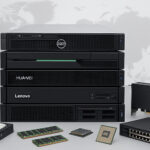
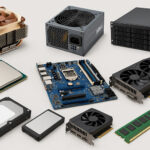

Server equipment prices often surprise even experienced IT professionals. The costs can easily multiply when scaling operations across data centers, cloud environments, and enterprise networks. Understanding why server hardware is so expensive requires examining the materials, manufacturing processes, market forces, and performance demands that differentiate enterprise-grade components from consumer devices.
The Real Cost Behind Enterprise-Grade Hardware
Unlike personal computers, servers operate 24/7 under extreme workloads, hosting business-critical applications, managing databases, and running virtualization and cloud computing frameworks. This means they depend on components built to handle continuous stress with maximum reliability. Every part—from CPUs and GPUs to ECC memory, RAID controllers, and redundant power supplies—is engineered for durability and uptime.
High-quality components such as enterprise SSDs with longer endurance cycles, server-grade motherboards with more layers and channels, and advanced cooling systems significantly raise production costs. These features reduce total downtime and ensure consistent computing power, making them non-negotiable in environments that value stability and low failure rates.
Research, Development, and Certification Costs
Major OEMs like Dell, Hewlett Packard Enterprise, Cisco, Lenovo, and Supermicro invest billions in research and certification. Each newly released server undergoes long cycles of testing for thermal stability, firmware optimization, and compatibility with major enterprise software systems. The costs of maintaining global compliance—such as ISO, CE, and FCC certifications—are also substantial.
Every generation of servers introduces more powerful processors, faster RAM handling, and energy-efficient designs. These R&D cycles ensure innovation but also pass costs down the supply chain. When a new Intel Xeon Scalable or AMD EPYC processor debuts, prices move in tandem with the premium paid for top performance and reliability.
Market Demand, Scalability, and Supply Chain Pricing
Servers are not mass-produced like laptops or desktops. The global shipment volume is smaller, meaning the cost per unit is higher due to economies of scale. Data center operators, cloud service providers, universities, and enterprises drive most of the demand, often requesting customized configurations.
Customization further raises costs because specialized components like high-memory DIMMs, redundant fans, and advanced NICs must meet precise requirements. Manufacturing uncertainty, global supply chain disruptions, and rising material costs—especially for copper, silicon wafers, and semiconductors—have also pushed prices higher.
Company Expertise in Enterprise Server Solutions
WECENT is a professional IT equipment supplier and authorized agent for leading global brands including Dell, Huawei, HP, Lenovo, Cisco, and H3C. With over eight years of experience delivering enterprise server solutions, WECENT offers reliable, original hardware—from GPUs and CPUs to storage and network switches—serving industries such as finance, education, and data centers. The company provides custom configurations, OEM options, and full lifecycle support, helping clients maximize ROI on every IT investment.
Competitor Comparison Matrix
| Brand | Performance Efficiency | Energy Optimization | Warranty Support | Scalability |
|---|---|---|---|---|
| Dell PowerEdge | Excellent | High | 3–5 Years | Modular Design |
| HPE ProLiant | High | Very Efficient | 3 Years | Enterprise-Class |
| Lenovo ThinkSystem | Consistent | Balanced | 3 Years | Flexible Racks |
| Cisco UCS | Data-Centered | Exceptional | 5 Years | Cloud Optimized |
This balance of performance versus cost plays a large role in why server prices vary between brands. Each manufacturer tailors its product ecosystem for specific workloads—whether virtualization, AI training, or database management.
Core Technology Factors That Add to Server Prices
Server pricing often reflects technical advances that allow hardware to achieve higher compute density without compromising efficiency. Features like PCIe Gen5 lanes, NVMe storage interfaces, and DDR5 memory increase both capacity and power consumption, requiring more robust cooling and power management systems.
Other costly but crucial technologies include hot-swappable modules, real-time redundancy, and integrated monitoring software. Blade servers, for instance, maximize space efficiency but demand specialized chassis and management controllers, contributing to higher upfront investment.
Real User Cases and Quantified ROI
Enterprises adopting modern rack servers report tangible performance jumps and lower long-term costs despite higher initial expenses. For example, companies migrating from legacy ProLiant Gen9 servers to Gen11 models saw power consumption drop by 20% while achieving up to 60% higher processing efficiency. In cloud and AI-oriented deployments, the ROI often manifests as reduced latency, higher workload throughput, and fewer unplanned outages—vital in sectors where data availability defines competitiveness.
The Economics of Reliability and Downtime Prevention
One overlooked contributor to price is the guarantee of uptime. For a business generating millions in digital transactions per day, even a few minutes of downtime translates to lost revenue and reputational damage. Enterprise vendors thus design every component with redundancy—dual power supplies, mirrored drives, and automated failover—to prevent catastrophic failures.
These design redundancies add to manufacturing costs but significantly reduce the total cost of ownership. That’s why enterprise IT decision-makers often view servers as long-term assets rather than short-term purchases.
Global Market Insights and Pricing Trends
Reports from IDC and Gartner show a steady rise in global server spending, reaching nearly 120 billion USD annually. Demand surged due to AI adoption, remote work trends, and the shift toward hybrid multi-cloud infrastructure. Businesses now invest more heavily in GPUs and accelerators for machine learning models, especially as NVIDIA’s A100, H100, and upcoming Blackwell B200 and B300 chips dominate data center upgrades.
As new processor generations enter production, older models drop modestly in price but still retain high value due to proven stability. This persistent baseline cost demonstrates how server equipment preserves utility and resale potential far better than consumer-grade systems.
Future Trend Forecast in Server Costs
By 2027, analysts expect server prices to continue rising as AI workloads, data analytics, and 5G infrastructure expand. However, the shift toward modular and liquid-cooled servers, renewable power integration, and chiplet-based CPU designs may gradually offset manufacturing costs. The rise of refurbished and certified pre-owned enterprise hardware also introduces cost-effective alternatives while supporting sustainability goals.
Final Perspective: Why Paying More Means Gaining More
The expense of server equipment reflects performance assurance, continuous uptime, compliance, and future scalability. While the sticker price seems daunting, the long-term savings in operational efficiency, power optimization, and security justify the investment. Choosing the right vendor and configuration ensures that enterprises receive exactly what they pay for—reliability, speed, and seamless integration across an always-on infrastructure.
For growing organizations and data-driven enterprises, understanding these cost factors is the first step toward smarter IT budgeting and sustainable digital expansion.