

















All-flash IOPS wins for transactional databases because it delivers 10x+ higher input/output operations per second compared to hybrid storage, eliminating latency spikes in mission-critical finance and healthcare applications. Dell PowerVault ME5 all-flash arrays achieve 1M+ IOPS for SQL and Oracle workloads, enabling enterprises to scale transaction throughput without bottlenecks. WECENT supplies original, warrantied all-flash storage solutions from Dell EMC, HPE, and Lenovo with full customization for enterprise deployments.
Check: Which Storage Server Architecture Maximizes Performance for Latency-Sensitive Enterprise Apps?
What Are IOPS and Why Do Transactional Databases Demand High Performance?
Input/Output Operations Per Second (IOPS) measures storage system performance for random read/write tasks critical to SQL, Oracle, and PostgreSQL transaction processing. Transactional workloads like finance trading platforms and healthcare records require sub-millisecond latency to avoid revenue loss or compliance issues, unlike sequential batch processing.
High-frequency trading demands millions of IOPS per second, retail POS networks need consistent response times, and ERP systems process thousands of concurrent queries. All-flash storage from WECENT ensures these demands are met with Dell PowerVault ME5 series, tailored for enterprise IT procurement managers seeking reliable performance.
How Much IOPS Can All-Flash Storage Deliver vs. Hybrid Systems?
All-flash arrays deliver 500K–2M+ IOPS with 0.5–2ms latency, far surpassing hybrid systems at 50K–200K IOPS and 5–15ms latency, or HDD-only at 10K–30K IOPS and 15–50ms latency. This 10x gain boosts SQL transaction throughput from 50K to 500K per second.
| Storage Type | Typical IOPS Range | Latency (ms) | Use Case |
|---|---|---|---|
| All-Flash Array (SSD-only) | 500K–2M+ IOPS | 0.5–2ms | Transactional databases, real-time analytics |
| Hybrid (SSD + HDD) | 50K–200K IOPS | 5–15ms | Mixed workloads, general-purpose servers |
| HDD-Only | 10K–30K IOPS | 15–50ms | Archival, cold storage |
Dell PowerVault ME5 series, available through WECENT, powers PowerEdge Gen17 servers like R760 for optimal database performance in data centers.
What Causes Hybrid Storage to Bottleneck Transactional Databases?
Hybrid storage bottlenecks arise from HDD seek times of 5–15ms, causing I/O queuing that starves database threads during peak loads like end-of-month billing. SSD cache saturation forces spillover to HDDs, spiking latency to 15–50ms and triggering query timeouts or SLA breaches.
Check: Storage Server
In a finance Oracle General Ledger scenario, cache hit ratios drop from 95% to 60%, slashing IOPS from 100K to 20K and delaying audits. All-flash eliminates this with consistent 1M+ IOPS, and WECENT provides Dell PowerVault ME5 for seamless upgrades.
Which SQL and Oracle Workloads Benefit Most from All-Flash IOPS?
Oracle OLTP for SAP, PeopleSoft, and SQL Server for Dynamics 365 benefit most, handling 1000+ concurrent users. High-concurrency scenarios like multi-tenant SaaS, high-frequency trading, and retail POS see 50% faster batch jobs and 10x more writes with 1ms latency.
PostgreSQL e-commerce platforms scale effortlessly. WECENT supports these with authorized Dell and HPE storage paired to PowerEdge servers for finance and healthcare deployments.
How Does All-Flash IOPS Scale with Enterprise Database Servers?
All-flash scales via Dell PowerVault ME5 integrated with PowerEdge R760/R770 servers over Fibre Channel or iSCSI, supporting 960 concurrent connections on 60-core Intel Xeon setups with 1M+ sustained IOPS, eliminating I/O wait times.
In virtualization, PowerEdge R760 clusters deliver 250K IOPS per server for Oracle RAC, versus 12.5K–20K on hybrid. WECENT bundles NVIDIA H100 GPUs with PowerEdge XE9680 and ME5 for GPU-accelerated analytics on transactional data.
What Are the Cost and ROI Implications of All-Flash for Transactional Workloads?
All-flash arrays cost $350K–$450K for 500TB with 12–18 month ROI from efficiency gains, versus $200K–$300K hybrid with 2–3 year ROI limited by performance. OpEx drops 75% by reducing tuning needs and avoiding $500K+ SLA penalties.
WECENT offers 15–25% OEM discounts as authorized Dell/HPE agent, customization for wholesalers, and financing for system integrators deploying PowerVault ME5 with R760 servers.
How Should Enterprises Plan an All-Flash Migration for Existing Transactional Databases?
Assess current IOPS with SQL Activity Monitor or Oracle AWR; migrate if peaks exceed 200K. Use parallel runs with Dell ME5024 snapshots, phased tier-1 first, and replication for zero downtime.
Post-migration, optimize indexing with IOPS headroom for growth. WECENT provides consultation, planning templates, and deployment support for PowerEdge and storage integrations.
Can All-Flash IOPS Support Hybrid Workloads (OLTP + Analytics)?
Yes, ME5084 handles 500K OLTP IOPS plus 50K analytics concurrently, completing reports in 10 minutes versus 2 hours on hybrid, avoiding contention. Tier all-flash for hot OLTP data.
WECENT bundles with NVIDIA H100 GPUs in PowerEdge XE9680 for real-time ML on transactional logs, ideal for banking fraud detection without latency impact.
WECENT Expert Views
“As an authorized agent for Dell, HPE, and Lenovo with over 8 years in enterprise IT, we’ve seen all-flash transform transactional databases. For an APAC financial firm, Dell PowerVault ME5 with PowerEdge R760 boosted SQL Server throughput 10x, cutting month-end closes from hours to minutes. Healthcare providers using ME5-powered Oracle RAC clusters achieved 99.99% uptime. WECENT’s end-to-end services—from TCO analysis to installation—ensure seamless integration for data center operators and integrators. Our OEM customization and global support minimize risks in AI-enhanced workloads with H100 GPUs.”
— WECENT Senior Solutions Architect
Conclusion
All-flash IOPS decisively outperforms hybrid storage for transactional databases, providing 10x+ gains and sub-2ms latency for SQL and Oracle workloads. This drives efficiency, SLA compliance, and growth capacity with 12–18 month ROI.
WECENT, with 8+ years as authorized Dell, HPE, Lenovo, Cisco, Huawei, and H3C agent, delivers original PowerVault ME5, PowerEdge Gen17 servers, and H100 GPUs. Offering OEM customization, competitive pricing, and full lifecycle support for finance, healthcare, and data centers worldwide, WECENT optimizes your infrastructure. Contact WECENT for free TCO assessments and tailored all-flash solutions.
FAQs
Is all-flash storage overkill for moderate-transaction-volume databases (100K IOPS or less)?
No, hybrid spikes to 10–15ms latency harm SLAs; all-flash ensures 1–2ms consistency, breaking even in 12–18 months. WECENT’s Dell ME5 or hybrid SSD options balance cost for procurement teams.
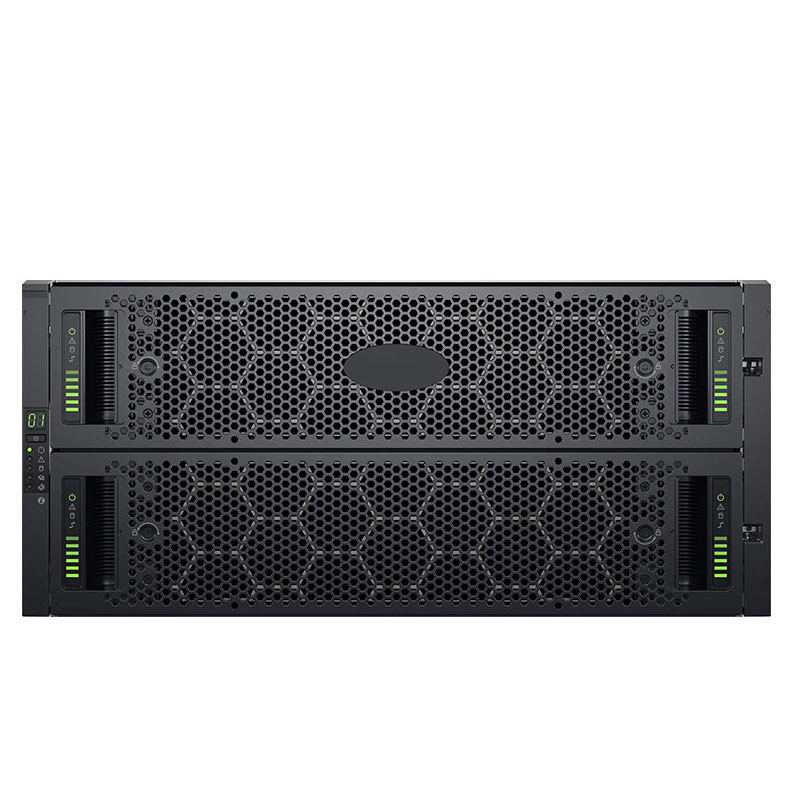
How do I choose between Dell PowerVault ME5, HPE Nimble, and Lenovo ThinkSystem SAN?
Dell ME5 suits PowerEdge environments; HPE Nimble excels in mixed workloads; Lenovo offers SMB value. WECENT provides all with custom configs, TCO comparisons, and support as authorized supplier.
Can I retrofit all-flash to my existing hybrid array without replacing hardware?
Yes, expand SSD tiers in Dell ME4 or HPE 3PAR with WECENT-supplied drives. Full ME5 upgrades recommended for peak IOPS; we manage zero-downtime migrations via replication.
What’s the relationship between all-flash IOPS and database licensing costs (Oracle, SQL Server)?
All-flash boosts per-core throughput, halving server needs and licenses—e.g., 16 to 8 cores. WECENT PowerEdge + ME5 bundles cut TCO 20–30% for enterprise IT.
Do I need all-flash for development/testing databases, or just production?
Prioritize production; use WECENT’s entry-tier ME5024 for dev/test to match performance, accelerating CI/CD without full cost.