

















All-flash storage servers deliver sub-millisecond latency and 1M+ IOPS for AI, virtualization, and real-time analytics, while hybrid storage servers combine SSD cache with HDD tiers to optimize cold data storage at lower cost. Choose all-flash for speed-critical workloads; hybrid for balanced data center ROI. WECENT supplies authorized Dell PowerVault ME5 all-flash arrays and HPE ProLiant hybrids with full technical support and warranties.
Check: Storage Server
How Does All-Flash Storage Outperform Hybrid for Enterprise Apps?
All-flash storage servers use solid-state drives exclusively, eliminating mechanical latency inherent to hybrid systems. This architecture delivers sub-millisecond response times and sustained IOPS throughput ideal for latency-sensitive workloads. Dell PowerVault ME5 series arrays exemplify this advantage, enabling real-time processing for AI inference on Dell PowerEdge servers equipped with NVIDIA H100 or H200 GPUs. Hybrid systems, by contrast, rely on SSD caching layered above hard drives, introducing 5–10ms latency for data not in cache. For virtualization hypervisors managing thousands of concurrent operations, all-flash architecture ensures predictable performance. WECENT, authorized for Dell infrastructure, configures all-flash deployments tailored to finance and healthcare data centers demanding consistent sub-millisecond response.
| Architecture Type | Latency Profile | Peak IOPS | Best-Fit Workload |
|---|---|---|---|
| All-Flash (SSD-Only) | <1ms typical | 1M+ IOPS | AI, virtualization, real-time analytics |
| Hybrid (SSD + HDD Tiers) | 5–10ms average | 100K–300K IOPS | Cold archives, mixed workloads, cost optimization |
What Makes Hybrid Storage Ideal for Cold Data in Data Centers?
Hybrid storage servers optimize total cost of ownership by tiering data based on access frequency. High-capacity HDDs store cold data—rarely accessed archives, compliance backups, and historical records—while SSDs cache frequently accessed “hot” data. This two-tier approach reduces capex 50–60% compared to all-flash, making it cost-effective for enterprises where 70–80% of stored data remains dormant. HPE ProLiant DL380 Gen11 servers paired with hybrid storage demonstrate this economics in mid-market deployments. Lenovo ThinkSystem SR665 V3 systems similarly support hybrid tiering for cloud and virtualization environments. WECENT’s partnership with HPE and Lenovo enables procurement managers to source pre-configured hybrid servers with installation and ongoing technical support, ensuring seamless integration into existing data center infrastructure.
Which Apps Demand All-Flash Storage vs. Cold Data Hybrid Workloads?
Latency-sensitive applications require all-flash: AI training pipelines, real-time database transactions, online transaction processing (OLTP), and virtualized desktop infrastructure. These workloads benefit from all-flash’s consistent sub-millisecond latency and high concurrent I/O throughput. Cold data workloads thrive on hybrid: backup repositories, regulatory compliance archives, disaster recovery repositories, and data lakes where most data is rarely accessed. Virtualization environments often split between both: hot VM data on all-flash tier, archived VM snapshots on hybrid. Dell PowerVault ME5012 all-flash arrays excel for hot tiers; HPE ProLiant with SSD-HDD hybrid trays handle mixed loads efficiently. WECENT consultants help procurement teams profile workloads and recommend the optimal architecture, reducing overprovisioning and OpEx waste.
Why Choose Hybrid Storage Servers for Cost-Optimized Data Centers?
Hybrid storage delivers compelling ROI by balancing performance and capacity cost. While all-flash SSD costs remain high per terabyte, HDDs offer 20–50× lower capacity cost, enabling affordable scalability for data-heavy enterprises. A hybrid server combining 2TB SSD cache with 200TB HDD storage costs 40–60% less than equivalent all-flash capacity while maintaining sub-5ms latency for hot data. This model suits financial services archives, healthcare records retention, media asset libraries, and research institutions managing multi-petabyte datasets. HPE ProLiant DL380 Gen11 and Lenovo ThinkSystem SR665 V3 platforms support tiered storage through heterogeneous drive bays, enabling flexible capacity expansion. System integrators and wholesalers benefit from WECENT’s OEM customization services: configure hybrid servers with custom SSD-to-HDD ratios, pre-load management firmware, and validate performance before shipment to end customers globally.
Check: WECENT Server Equipment Supplier
How Can All-Flash and Hybrid Integrate in Modern AI Infrastructure?
Advanced data centers deploy tiered architecture combining all-flash and hybrid tiers to optimize AI workload pipelines. Dell PowerVault ME5024 all-flash arrays handle real-time AI model inference and training dataset caching, while hybrid-equipped PowerEdge servers or HPE ProLiant systems store historical training data, intermediate model checkpoints, and pre-processing datasets. This hybrid-all-flash integration reduces latency bottlenecks during model training on NVIDIA H100 and H200 GPUs while maintaining scalable capacity for multi-terabyte datasets. Dell PowerEdge R760 and R770 servers support both architectures, enabling procurement teams to right-size storage per application tier. WECENT’s AI infrastructure expertise includes complete GPU availability—H100, H200, H800, B100, B200, B300—paired with recommended storage configurations, ensuring end-to-end solution coherence from procurement through deployment.
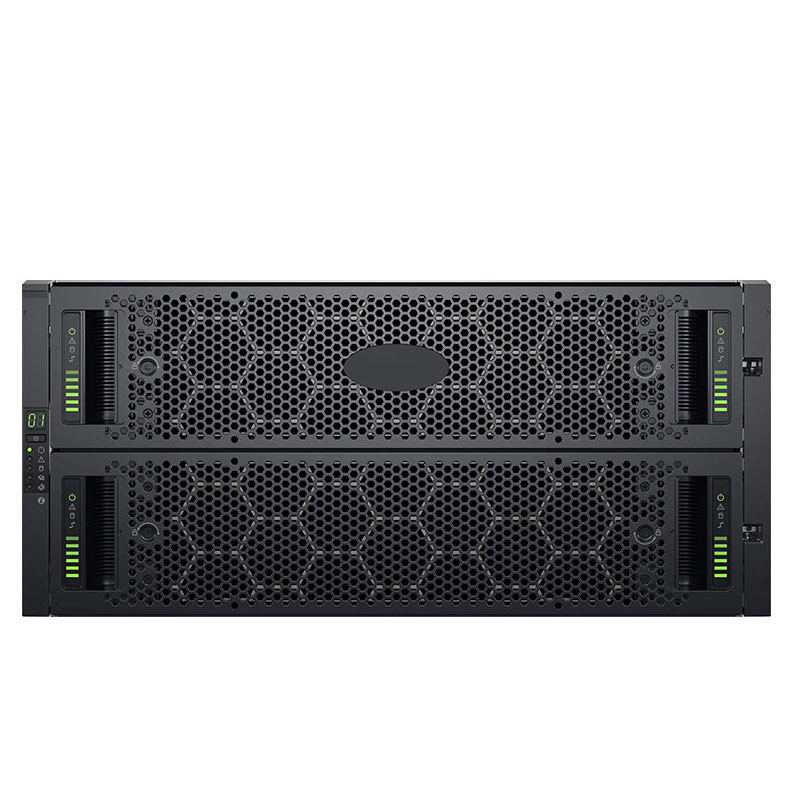
What Are Real-World Performance Benchmarks for All-Flash vs. Hybrid Servers?
All-flash storage servers consistently deliver 0.1–1ms latency with 15–25GB/s throughput, enabling millions of concurrent operations. Dell PowerVault ME5 series achieves these metrics for finance trading systems and high-frequency analytics. Hybrid servers achieve 2–5ms average latency for hot-tier data with 5–8GB/s throughput, adequate for batch processing, compliance reporting, and archival retrieval. Real-world ROI calculations show all-flash reducing application latency by 80–90% for latency-sensitive workloads, while hybrid reduces capex 50%+ for mixed/cold environments. Performance profiling conducted during WECENT consultations quantifies these differences for specific customer workloads, informing procurement decisions. HPE ProLiant DL320 Gen11 hybrid deployments in healthcare achieve consistent sub-10ms response for patient records while maintaining 100TB+ capacity per node at acceptable cost.
| Metric | All-Flash (Dell ME5012) | Hybrid (HPE DL380 Gen11) | Implication |
|---|---|---|---|
| Latency (avg) | 0.2–0.5ms | 2–5ms | All-flash 10–25× faster for latency-critical apps |
| Random IOPS | 1M+ | 100K–300K | All-flash scales to extreme concurrency; hybrid for moderate load |
| Sequential Throughput | 15–25GB/s | 5–8GB/s | All-flash preferred for streaming AI datasets |
| Capacity Cost (per TB) | $100–200 | $20–50 | Hybrid 4–10× cheaper for capacity; all-flash for speed |
How Should Procurement Managers Evaluate Storage Architecture for Their Data Center?
Procurement decisions require profiling: identify workload access patterns, latency SLAs, capacity growth, and budget constraints. Latency SLAs under 5ms demand all-flash or tiered hybrid; SLAs above 10ms permit pure hybrid. Capacity projections guide purchase timing—all-flash suits 1–10TB hot data; hybrid scales to 100TB+ efficiently. Budget analysis weighs capex against OpEx: all-flash higher upfront, lower long-term OpEx for hot data; hybrid lower capex, higher OpEx for cold data retrieval. Proof-of-concept deployments via WECENT enable testing specific workloads on Dell PowerVault ME5 or HPE ProLiant hybrids before full procurement commitment. System integrators benefit from WECENT’s authorized sourcing—guaranteed original hardware, manufacturer warranties, installation support, and ongoing maintenance—reducing procurement risk and ensuring compliance across global data center networks.
Which Storage Servers Does WECENT Supply for All-Flash vs. Hybrid Deployments?
WECENT, authorized agent for Dell, HPE, and Lenovo, offers comprehensive storage server portfolios. All-flash: Dell PowerVault ME5 series (ME5012, ME5024, ME5084) deliver enterprise-grade all-SSD performance. Hybrid: HPE ProLiant DL380 Gen11 and Lenovo ThinkSystem SR665 V3 support mixed SSD-HDD configurations. Both vendors provide flexible bay configurations, enabling custom tiering per customer requirements. WECENT’s 8+ years of enterprise infrastructure experience ensures proper sizing, pre-configuration validation, and seamless deployment. OEM and customization services allow wholesalers and system integrators to white-label solutions with custom storage ratios, firmware, and branding. Global shipping, installation support, and post-deployment technical support ensure successful infrastructure deployments across finance, healthcare, education, and data center sectors.
WECENT Expert Views
“All-flash storage is a strategic investment for enterprises prioritizing real-time AI inference, virtualization density, and sub-millisecond response requirements. Hybrid storage remains the pragmatic choice for mixed workloads where 70–80% of data is cold. The optimal deployment often combines both: Dell PowerVault ME5 all-flash arrays for hot tiers paired with HPE or Lenovo hybrid systems for archival capacity. At WECENT, we consult on workload profiling, recommend vendor-specific architectures, handle procurement and configuration, and support full lifecycle deployment. Our authorized partnerships with Dell, HPE, Lenovo, and Huawei guarantee original hardware, manufacturer warranties, and compliance certifications (CE, FCC, RoHS) across all storage tiers. Whether your data center needs 100% all-flash performance or balanced hybrid economics, WECENT delivers tested, integrated solutions with end-to-end support from initial consultation through ongoing maintenance.”
Can Storage Architecture Scale with Growing AI Workloads?
All-flash storage scales horizontally by adding additional Dell PowerVault arrays, enabling linear IOPS and throughput growth as AI training and inference demands increase. Hybrid systems scale through drive bay expansion and tiered capacity growth, accommodating explosive data growth at controlled cost. Both architectures integrate with modern NAS and SAN protocols, supporting seamless expansion within existing infrastructure. Dell PowerEdge Gen17 servers (R770, R770, R7715) paired with ME5 all-flash or hybrid tiers enable future-proofing for emerging workloads. Support for latest NVIDIA B200 and B300 GPUs ensures AI infrastructure remains current. WECENT’s consultative approach includes capacity planning forecasts, right-sizing recommendations, and phased procurement strategies that scale storage alongside GPU capacity and compute resources, ensuring balanced infrastructure growth.
Conclusion
All-flash and hybrid storage servers serve distinct but complementary roles in enterprise data centers. All-flash delivers exceptional performance for latency-sensitive applications—AI, virtualization, real-time analytics—via sub-millisecond latency and 1M+ IOPS. Hybrid storage optimizes cost-efficiency for mixed and cold workloads, balancing SSD performance with high-capacity HDD economics at 50–60% lower capex than all-flash. The optimal procurement strategy profiles workload characteristics, latency SLAs, and budget constraints, often combining both architectures in tiered deployments. WECENT, with 8+ years of enterprise infrastructure expertise and authorized partnerships with Dell, HPE, and Lenovo, enables procurement managers and system integrators to source, configure, and deploy both storage architectures with confidence. From consultation and architecture design through installation and ongoing technical support, WECENT ensures your storage infrastructure aligns with performance requirements and cost objectives, maximizing data center ROI across finance, healthcare, education, and cloud environments.
FAQs
What is the primary difference between all-flash and hybrid storage servers?
All-flash storage uses exclusively solid-state drives (SSDs) for maximum latency and IOPS performance, ideal for speed-critical workloads. Hybrid storage combines SSD cache with high-capacity hard drives (HDDs), reducing cost while maintaining acceptable performance for mixed and cold data workloads. All-flash excels in performance; hybrid excels in cost-efficiency.
Is all-flash storage worth the higher cost for typical enterprise data centers?
All-flash justifies higher capex for latency-sensitive workloads—AI training, virtualization, real-time analytics, financial trading systems—where sub-millisecond response directly impacts business value. For data centers with 70%+ cold or archival data, hybrid storage delivers superior ROI. WECENT consultants profile workloads to recommend cost-optimal architectures for each customer’s specific requirements.
Which brands does WECENT supply for all-flash and hybrid storage?
WECENT supplies authorized Dell PowerVault ME5 all-flash arrays and HPE ProLiant DL380 Gen11 and Lenovo ThinkSystem SR665 V3 hybrid servers. All products include manufacturer warranties, compliance certifications (CE, FCC, RoHS), and WECENT’s technical support services spanning consultation, installation, and ongoing maintenance.
Can WECENT customize storage servers with specific SSD-to-HDD ratios for hybrid deployments?
Yes. WECENT offers OEM and customization services enabling wholesalers and system integrators to configure hybrid servers with customer-specified SSD-HDD ratios, pre-loaded firmware, and branding. Custom configurations are validated and tested before shipment, ensuring performance alignment with customer requirements.
How does latency impact real-world application performance in all-flash vs. hybrid storage?
All-flash sub-millisecond latency enables high concurrency for AI and virtualization, dramatically improving application responsiveness and throughput. Hybrid 5–10ms latency adequate for batch processing and sequential access but insufficient for real-time workloads. WECENT performance profiling quantifies latency impact for specific workloads, guiding architecture selection.