

















NVMe Gen5 excels in ultra-low-latency AI and HPC with sub-5μs response times and 32GB/s+ throughput, while SAS4 offers reliability and cost efficiency at 12GB/s for traditional I/O. Choose NVMe Gen5 for AI training; SAS4 for mission-critical reliability. WECENT supplies original drives for Dell PowerEdge and HPE ProLiant servers.
Check: WECENT Server Equipment Supplier
What Are the Core Technical Differences Between SAS4 and NVMe Gen5?
SAS4 delivers 12GB/s sequential speeds using SCSI command sets for reliable enterprise RAID and SAN integration in Dell PowerEdge Gen14-17 and HPE ProLiant servers. NVMe Gen5 achieves 32GB/s+ throughput via PCIe 5.0 with direct CPU attachment in M.2/U.2 slots, enabling high IOPS for AI workloads. NVMe reduces latency by leveraging parallel PCIe lanes over SAS shared bus logic.
How Do Latency and Performance Metrics Compare in Real-World Deployments?
NVMe Gen5 latency averages under 5μs with over 900,000 random IOPS, ideal for AI inference. SAS4 ranges 10-20μs with 100,000-400,000 IOPS, suiting balanced enterprise loads. NVMe Gen5 sustains higher throughput under parallel workloads in Dell R760 and HPE DL380 Gen11 servers.
| Metric | SAS4 | NVMe Gen5 |
|---|---|---|
| Max Sequential Speed | 12 GB/s | 32+ GB/s |
| Latency (Avg) | 10–20 μs | <5 μs |
| Random IOPS (4K blocks) | 100K–400K | 900K+ |
| Power Draw (Idle/Active) | 3–8W / 8–12W | 2–5W / 6–10W |
| Supported in Dell R760/XE9680 | ✓ (SAS controllers) | ✓ (NVMe M.2/U.2) |
| Supported in HPE DL380 Gen11 | ✓ (SAS controllers) | ✓ (NVMe slots) |
Why Does SAS4 Remain Preferred for Mission-Critical Enterprise Environments?
SAS4 provides RAID redundancy, error recovery, and firmware tuning from vendors like Seagate for 24/7 operations in finance and healthcare. It offers backward compatibility with Dell PowerEdge Gen14-16 and HPE ProLiant Gen11 without updates. Cost per GB is lower at $0.80–$1.20 versus NVMe Gen5’s $1.50–$2.50 for high-capacity drives.
When Should You Choose NVMe Gen5 Over SAS4 for Enterprise Workloads?
Select NVMe Gen5 for AI training on H100/H200 GPUs in Dell XE9680 servers, real-time analytics needing 900K+ IOPS, and edge virtualization. It future-proofs with PCIe Gen6/7 roadmaps. SAS4 suits non-AI OLTP where reliability and cost matter more than peak speed.
How Do SAS4 and NVMe Gen5 Integrate into Dell PowerEdge and HPE ProLiant Servers?
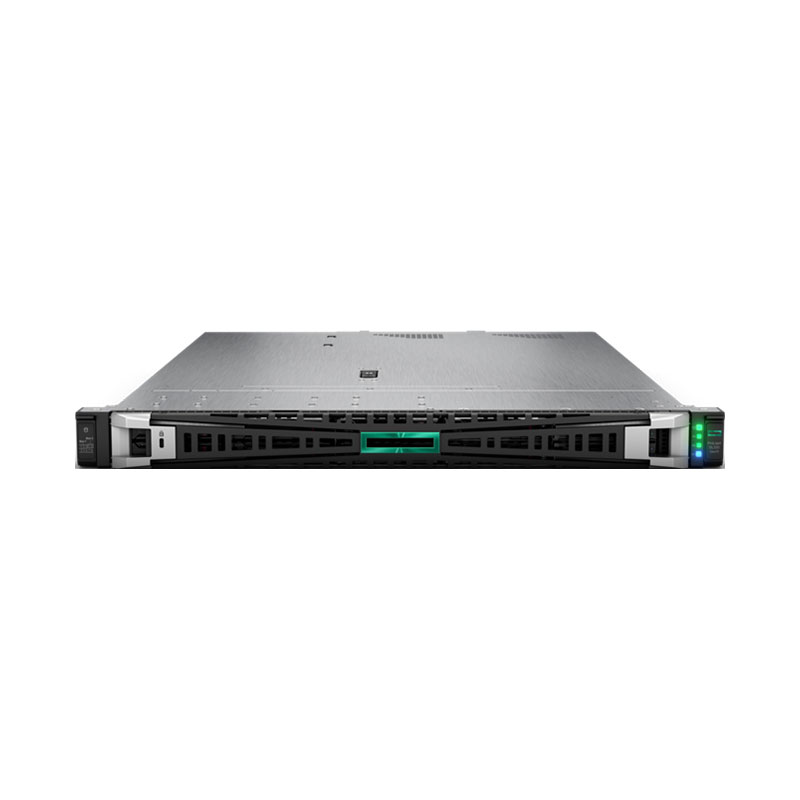
Dell PowerEdge R760 supports 14 SAS4 drives via PERC H855 controllers and 24 NVMe U.2 slots in R7625/XE9680. HPE ProLiant DL380 Gen11 offers 4 SAS4 LFF slots plus NVMe M.2. WECENT supplies original SAS4 and NVMe Gen5 drives pre-validated for these servers with OEM customization.
Check: SAS vs NVMe for Enterprise Data Centers
What Are the Cost and TCO Implications of SAS4 vs NVMe Gen5 for Data Centers?
SAS4 arrays cost 40-60% less upfront for high-capacity storage, ideal for RAID 6 in traditional workloads. NVMe Gen5 lowers query times by 30-40%, saving compute cycles, and reduces power by 5kW in large racks versus SAS4. Hybrid tiers optimize TCO for mixed AI and OLTP.
| Deployment | SAS4 3-Year TCO | NVMe Gen5 3-Year TCO |
|---|---|---|
| 100TB | $10K (Capex heavy) | $14K (Efficiency gains) |
| 500TB | $45K | $55K |
| 1PB | $85K | $110K (Power savings) |
Which Interface Supports Emerging AI and HPC Infrastructure Best?
NVMe Gen5 pairs with H100/B200 GPUs in Dell XE9680 for sub-5μs I/O, preventing 20-35% utilization loss from SAS4 latency. It scales for multi-node training with low inter-node delays. SAS4 lags in AI due to higher latency, though viable for HPC without extreme parallelism.
WECENT Expert Views
As an authorized agent for Dell, HPE, Huawei, Lenovo, Cisco, and H3C with 8+ years in enterprise IT, WECENT recommends a hybrid strategy for data centers: SAS4 for OLTP in Dell PowerEdge R760 with RAID 6; NVMe Gen5 for AI in XE9680 with H100 GPUs. Tier hot data on NVMe, cold on SAS4 to cut power 25%. WECENT supplies original, warrantied SSDs/HDDs, full lifecycle support, and OEM for wholesalers and integrators.
Conclusion
SAS4 anchors reliable, cost-effective storage in mission-critical Dell PowerEdge and HPE ProLiant setups for virtualization and databases. NVMe Gen5 powers AI acceleration with unmatched latency and IOPS for H100/B200 workloads. Enterprise IT leaders should deploy hybrid tiers: NVMe for hot AI data, SAS4 for archives. WECENT, Shenzhen-based supplier of original Dell, HPE servers, GPUs from RTX 50 to B300, storage, and switches, ensures compliant procurement with warranties, customization, and global support for data centers, finance, and healthcare.
Frequently Asked Questions
Can I upgrade existing Dell PowerEdge R760 servers from SAS4 to NVMe Gen5 without replacing controllers?
Yes, R760 has independent NVMe M.2/U.2 slots alongside SAS controllers. Add NVMe drives with BIOS updates for boot/RAID. WECENT offers pre-validated kits for hybrid SAS/NVMe in existing fleets, no controller changes needed.
How does NVMe Gen5 latency affect AI model training speed on H100 GPUs?
NVMe Gen5’s <5μs latency cuts data loading by 60-75% versus SAS4, boosting epoch times 15-20% in H100 clusters. It maintains >85% GPU utilization, preventing stalls. WECENT bundles NVMe Gen5 with H100 in Dell XE9680 for validated AI performance.
Is SAS4 being phased out? Should I still invest in new SAS4 drives?
SAS4 supports OLTP through 2030 with no EOL from vendors. Invest for legacy infrastructure without AI needs; pair with NVMe for hybrids. WECENT stocks SAS4 for cost-efficient RAID in PowerEdge R760, advising against for new AI builds.
What’s the real-world latency difference between SAS4 and NVMe Gen5 in a Dell PowerEdge R760?
SAS4 averages 12-18μs (p99: 50-80μs); NVMe Gen5 2-4μs (<10μs p99) at 4K reads. NVMe eliminates bottlenecks for <10ms queries. WECENT provides R760 benchmarks for procurement.
Do I need NVMe Gen5 or is Gen4 sufficient for enterprise data centers today?
Gen4 suffices for virtualization at lower cost; Gen5 for H100 AI needing 900K+ IOPS. Gen5 future-proofs to 2030. WECENT stocks both, recommending Gen5 for new GPU servers like XE9680.