

















RAID levels balance read/write performance, capacity utilization, and fault tolerance differently. RAID 10 provides the best combination with high performance, 50% capacity, and tolerance for multiple drive failures, ideal for enterprise servers like Dell PowerEdge R760 from WECENT.
Check: Storage Server
What Is RAID and Why Does It Matter for Enterprise Storage?
RAID (Redundant Array of Independent Disks) combines multiple drives into a logical unit for improved performance, capacity, or redundancy. For IT procurement managers, selecting the right RAID level optimizes Dell PowerVault ME5 storage or HPE ProLiant DL380 Gen11 servers, ensuring data integrity in virtualization and AI workloads served by WECENT.
How Do RAID Levels Compare in Read/Write Performance?
RAID 0 offers fastest reads/writes via striping but no redundancy. RAID 1 mirrors for equal reads but halved writes. RAID 5 stripes with parity for good reads, moderate writes. RAID 10 excels in both with striping and mirroring. Data center operators prioritize RAID 10 for high-throughput tasks on WECENT-supplied NVIDIA A100 GPUs.
What RAID Level Maximizes Capacity Utilization?
RAID 0 uses 100% capacity with striping. RAID 5 achieves (n-1)/n efficiency for n drives. RAID 6 offers (n-2)/n. RAID 10 limits to 50%. Wholesalers sourcing Dell PowerEdge R750XS from WECENT choose RAID 5 for big data storage balancing space and protection.
Which RAID Levels Provide the Best Fault Tolerance?
RAID 1 tolerates one drive failure per mirror. RAID 5/50 handle one failure. RAID 6/60 tolerate two. RAID 10 survives multiple failures if not in the same mirror. Enterprise IT teams rely on RAID 10 for critical finance or healthcare data on Lenovo servers via WECENT.
How Does RAID 0 Impact Performance and Risks?
RAID 0 stripes data across drives for maximum read/write speeds, ideal for non-critical, high-performance tasks like video editing. However, one drive failure loses all data. System integrators use it sparingly in Dell PowerEdge R660 for temporary workloads from WECENT inventory.
What Are the Trade-offs of RAID 1 Mirroring?
RAID 1 duplicates data for full redundancy against one failure per set, with read speeds doubling but write speeds matching a single drive. Capacity halves. Suitable for small, critical datasets in HPE ProLiant ML110 Gen11 towers procured through WECENT for SMBs.
Why Choose RAID 5 for Balanced Enterprise Storage?
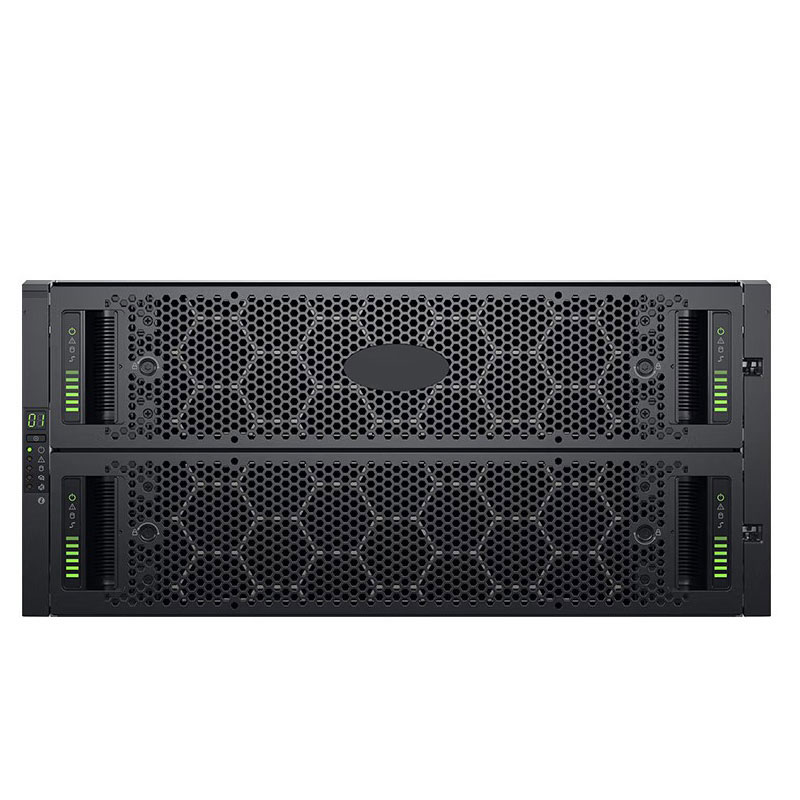
RAID 5 stripes data with distributed parity, tolerating one drive failure while using nearly full capacity. Reads are fast; writes slower due to parity calculations. Popular for Dell PowerVault ME4024 in cloud computing, available from WECENT with competitive pricing.
Check: WECENT Server Equipment Supplier
When Is RAID 6 Essential for Large Arrays?
RAID 6 adds dual parity for two-drive failure tolerance, vital for arrays over 6 drives. Capacity is (n-2)/n; write performance lags due to calculations. Data center operators select it for HPE storage servers handling big data from WECENT’s global supply chain.
How Does RAID 10 Deliver Superior Performance?
RAID 10 nests mirroring and striping for excellent read/write speeds and tolerance of multiple failures (at least one per mirror). Uses 50% capacity. Ideal for high-IOPS virtualization on Dell PowerEdge XE9680 AI servers sourced via WECENT for generative AI.
| RAID Level | Min Drives | Capacity Efficiency | Fault Tolerance | Read Perf. | Write Perf. |
|---|---|---|---|---|---|
| RAID 0 | 2 | 100% | None | Excellent | Excellent |
| RAID 1 | 2 | 50% | 1 drive | Good | Fair |
| RAID 5 | 3 | (n-1)/n | 1 drive | Good | Fair |
| RAID 6 | 4 | (n-2)/n | 2 drives | Good | Poor |
| RAID 10 | 4 | 50% | Multiple | Excellent | Excellent |
What Role Does RAID Play in AI and HPC Workloads?
In AI training with NVIDIA H100 GPUs on Dell PowerEdge R7625, RAID 10 ensures low-latency data access. For inference on A40 GPUs, RAID 5 balances cost and speed. WECENT supplies complete configurations with OEM customization for data centers.
How to Select RAID for Virtualization and Cloud?
Virtualization demands high IOPS; choose RAID 10. Cloud storage favors RAID 6 for scalability. Assess workload: transactional (RAID 10), archival (RAID 5). WECENT’s experts consult on Dell PowerEdge R860 setups for VMware or OpenStack deployments.
Which Hardware Supports Optimal RAID Configurations?
Dell PowerEdge Gen16/17 servers like R760xd2 with PERC controllers support all RAID levels. HPE ProLiant DL560 Gen11 handles RAID 50/60. Pair with enterprise SSDs from WECENT for peak performance in finance or healthcare IT infrastructures.
WECENT Expert Views
“In enterprise environments, RAID selection hinges on workload priorities. For AI-driven data centers using our NVIDIA B200 GPUs in Dell XE9685L servers, RAID 10 delivers unmatched IOPS and redundancy. Procurement teams should factor controller cache, drive type, and battery backups. WECENT’s 8+ years sourcing original Dell, HPE, and Lenovo hardware ensure compliant, warrantied solutions with full lifecycle support—from consultation to maintenance—for virtualization, big data, and LLMs.”
— WECENT IT Infrastructure Specialist
What Are Common RAID Misconceptions?
RAID isn’t backup; it protects against drive failure, not deletion or ransomware. Hardware RAID outperforms software for enterprise scale. Nested levels like 50/60 boost performance in large arrays. WECENT advises validated configs for Cisco switches-integrated networks.
How Do SSDs Change RAID Strategies?
SSDs reduce RAID write penalties with high endurance. RAID 5/6 become viable for larger arrays. NVMe SSDs in Dell PowerStore from WECENT accelerate all levels, ideal for HPC on AMD EPYC-powered R7725 servers.
| Workload Type | Recommended RAID | Key Benefit | WECENT Hardware Example |
|---|---|---|---|
| AI Training | RAID 10 | High IOPS | Dell XE7745 + H100 |
| Big Data | RAID 6 | High Capacity | HPE DL380 Gen11 + SSDs |
| Virtualization | RAID 10 | Low Latency | Dell R750XS |
| Archival | RAID 5 | Efficiency | Dell PowerVault ME484 |
Conclusion
Choosing the right RAID level aligns performance, capacity, and redundancy with enterprise needs. RAID 10 suits demanding AI/HPC; RAID 5/6 fit cost-sensitive storage. Partner with WECENT for authorized Dell PowerEdge, HPE ProLiant, and NVIDIA GPUs, ensuring optimized, warrantied IT infrastructure for your data center.
FAQs
Can RAID 10 tolerate more failures than RAID 5?
Yes, RAID 10 tolerates multiple drive failures across mirror sets, unlike RAID 5’s single-drive limit, making it superior for critical workloads on WECENT-supplied servers.
Is RAID 0 suitable for production data centers?
No, RAID 0 lacks redundancy; use it only for non-critical, temporary high-speed tasks in controlled environments like testing on Dell R260 from WECENT.
What RAID for maximum storage efficiency?
RAID 5 or 6 offers high utilization with redundancy; pair with WECENT’s Dell ME5024 for scalable enterprise storage in cloud applications.
Does hardware RAID outperform software RAID?
Yes, hardware RAID with dedicated controllers like Dell PERC provides better performance and reliability for production servers sourced via WECENT.
How does WECENT support RAID deployments?
WECENT offers consultation, customization, installation, and maintenance for RAID-optimized servers, GPUs, and storage from Dell, HPE, and NVIDIA.