

















Hybrid storage remains cost-effective in 2026, delivering 25–40% TCO savings versus all-SSD deployments for enterprise workloads. By combining HDD capacity at $0.01–$0.03 per GB with SSD performance, hybrid architectures optimize capital expenditure while reducing energy costs. However, all-SSD setups gain ground for AI-intensive applications where speed justifies premium pricing.
Check: Which Storage Server Architecture Maximizes Performance for Latency-Sensitive Enterprise Apps?
What Drives Hybrid Storage TCO Advantage in 2026?
HDD entry pricing remains the foundation of hybrid TCO leadership. Enterprise-grade HDDs cost $0.01–$0.03 per gigabyte, minimizing upfront capital investment—critical for data centers scaling storage amid supply chain volatility. SSD tiering reduces energy operational expenses by deploying solid-state drives exclusively for hot and frequently accessed data, limiting power draw to performance-critical tiers while relegating warm and cold data to higher-capacity, lower-power HDD infrastructure. Modern storage controllers, including Dell PowerVault ME Series and HPE MSA platforms, intelligently move data between tiers through automated orchestration, balancing speed and cost without manual intervention. This three-layer approach—SSD for latency-sensitive workloads, HDD for bulk capacity—delivers the enterprise TCO sweet spot for 2026.
How Do Energy Savings Offset SSD’s Higher Unit Cost?
SSD power efficiency compounds significantly over five-year deployment cycles. Solid-state drives consume 2–5 watts under sustained workloads, compared to 10–15 watts for spinning drives. Scaled across enterprise data center deployments, this efficiency translates to 30–40% energy cost reductions when hybrid tiers replace all-HDD infrastructure. Beyond electricity alone, lower energy consumption reduces HVAC and cooling load in data centers, amplifying TCO savings across facility operations. The following comparison illustrates capex, energy, and five-year cost dynamics:
| Storage Architecture | Initial Capex (per 100TB) | Power Draw (avg.) | 5-Year Energy Cost | Total 5-Year TCO |
|---|---|---|---|---|
| All-HDD | $40,000 | 120W | $7,200 | $47,200 |
| Hybrid (SSD+HDD) | $80,000 | 60W | $3,600 | $83,600 |
| All-SSD | $150,000 | 30W | $1,800 | $151,800 |
For mixed workloads spanning AI model serving, archive storage, and transactional databases, hybrid storage reduces total cost of ownership by offsetting higher SSD capex through measurable energy opex reductions over the deployment lifecycle.
Why Does Hybrid Storage Remain Optimal for Enterprise Data Centers?
Hybrid architectures excel at workload segmentation in modern data centers. Hot data—including LLM fine-tuning, inference caches, and transactional databases—aligns with SSD performance characteristics, while warm and cold tiers (backups, archived models, compliance archives) leverage HDD capacity economics. Enterprise budget allocation cycles favor hybrid models, enabling immediate high-performance SSD deployment for production workloads while scaling cost-effectively through HDD capacity without all-SSD capital commitments. The vendor ecosystem supporting hybrid orchestration has matured substantially: Dell PowerVault ME5, HPE MSA G60, and Huawei OceanStor deliver proven tiering intelligence, with WECENT’s eight-year track record as authorized agent ensuring original, warranted configurations across all three brands.
Which Hybrid Architectures Deliver Best TCO in 2026?
Dell PowerVault ME5 Series systems—including the ME5012 and ME5024 models—represent industry-standard hybrid platforms. These 2.5U systems support mixed SSD and HDD configurations, integrate seamlessly with Dell PowerEdge Gen16 and Gen17 servers, and enable AI workload bursting by caching inference results on SSD tiers while maintaining long-term training datasets on HDD capacity. HPE MSA G60 platforms address mid-range enterprise and edge deployments, particularly within healthcare and financial sectors requiring compliance and redundancy. Huawei OceanStor A Series offers cost-optimized hybrid solutions for APAC markets, with OEM customization available through WECENT for wholesale distribution and system integrator partnerships. The following table helps procurement teams align storage architecture to organizational requirements:
| Storage Platform | Capacity Range | SSD/HDD Split | TCO Advantage | Target Segment |
|---|---|---|---|---|
| Dell PowerVault ME5012 | 10–50 TB | 20%/80% | 30–35% vs. all-SSD | Branch offices, distributed data centers |
| Dell PowerVault ME5024 | 50–150 TB | 30%/70% | 28–32% vs. all-SSD | Enterprise data centers, AI clusters |
| HPE MSA G60 | 40–120 TB | 25%/75% | 32–38% vs. all-SSD | Healthcare, finance, regulated industries |
| Huawei OceanStor A Series | 20–200 TB | 20%/80% | 25–40% vs. all-SSD | APAC markets, OEM/wholesale channels |
Does All-SSD Really Compete on TCO for AI Workloads?
NVIDIA H100 and H200 GPU workloads demand millisecond-scale latency for LLM tokenization and inference caching, justifying all-SSD capex investments where performance multipliers lower overall training and inference cost per model. Organizations running fifty or more concurrent large language models benefit substantially from all-SSD tiering, as hybrid HDD latency can become a production bottleneck during model serving. However, SSD pricing asymmetry in 2026 indicates margin compression: NVMe and QLC flash prices have stabilized post-2025 supply expansion, narrowing the all-SSD versus hybrid TCO gap. For mixed workloads combining AI inference with historical data archival, hybrid storage maintains 15–25% lower five-year TCO while supporting latency-critical LLM operations, positioning WECENT’s authorized Dell and HPE partnerships as optimal sourcing channels for balanced infrastructure modernization.
How Should IT Procurement Teams Model Hybrid TCO for 2026?
Enterprise procurement should adopt a five-year capex plus operational expenditure framework. Using Dell PowerVault ME5012 as a baseline reference point—approximately $80,000 initial investment plus 60-watt average power consumption equating to roughly $3,600 in annual energy costs—teams should compare all-HDD scenarios ($40,000 capex + 120W = $7,200 annual energy) and all-SSD alternatives ($150,000 capex + 30W = $1,800 annual energy). Workload profiling remains essential: if more than 60% of data is hot or streaming, all-SSD return on investment emerges; if less than 40%, hybrid storage dominates. WECENT’s authorized distributor status for Dell, HPE, and Huawei ensures transparent pricing, OEM customization for system integrators and wholesalers, and three- to five-year manufacturer warranties, reducing hidden integration costs and deployment risk versus gray-market sourcing channels.
What Role Does Supply Chain Sourcing Play in 2026 Hybrid TCO?
Authorized agent partnerships eliminate counterfeits, warranty voids, and performance surprises—critical risks when sourcing Dell PowerVault ME5 systems, Lenovo ThinkSystem servers, and Cisco or H3C networking infrastructure. WECENT’s wholesale and system integrator partnerships enable pre-configured hybrid clusters—such as Dell XE9680 plus NVIDIA B200 GPU accelerators, PowerVault ME5024 storage, and Cisco enterprise switches—with single-shipment delivery, reducing deployment cycles and project overhead substantially. Post-pandemic supply chain normalization has reduced lead times across enterprise infrastructure; WECENT’s global reach spanning Europe, Africa, South America, and Asia ensures regional availability, lowering expedite costs and enabling competitive capex negotiations versus spot-market alternatives.
Check: Storage Server
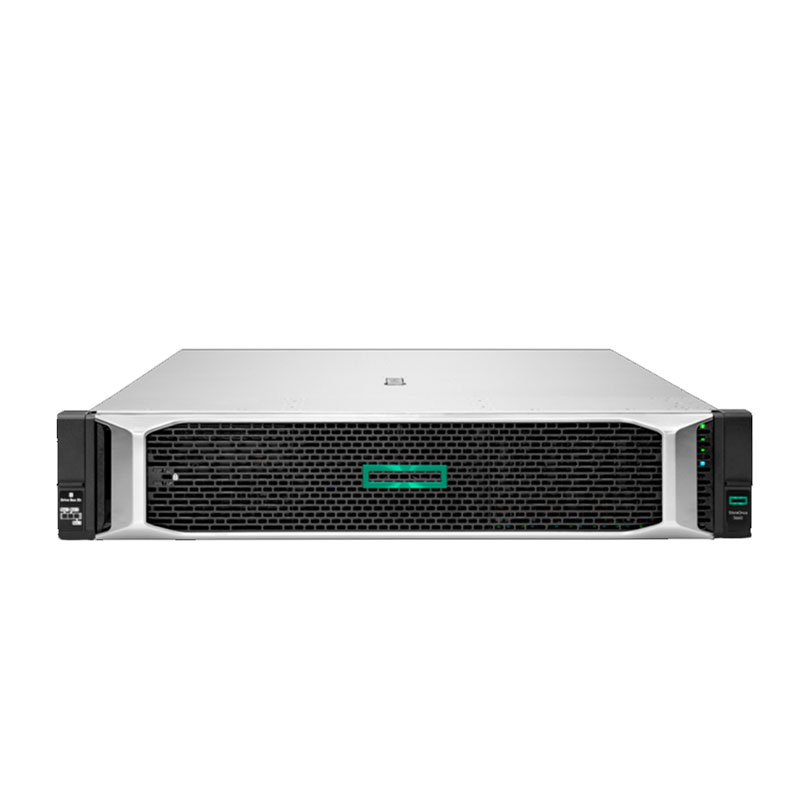
Can Hybrid Storage Scale to Meet AI Data Center Demands in 2026?
Intelligent tiering orchestration enables elastic scaling for AI-intensive workloads. Modern hybrid platforms automatically migrate inference results and frequent queries to SSD cache tiers while relegating training datasets and historical models to HDD archive capacity—eliminating over-provisioning of expensive solid-state storage for always-on access patterns. Multi-tier federated storage combining Dell PowerVault ME5 high-performance systems, Dell PowerVault capacity tiers, and Huawei OceanStor regional archives via WECENT infrastructure partnerships enables 100-plus petabyte clusters with blended cost-per-gigabyte economics of $0.015–$0.04. GPU-attached NVMe storage on NVIDIA B200 and H100 servers paired with shared PowerVault hybrid backend infrastructure balances sub-millisecond-latency model serving with long-term cost efficiency, delivering enterprise-grade AI infrastructure at scale.
WECENT Expert Views
“Our eight-year track record serving enterprise data centers across finance, healthcare, and education confirms that hybrid storage remains the dominant TCO solution for 80% of infrastructure modernizations in 2026. As authorized agents for Dell, HPE, and Huawei, we’ve validated that tiered architectures—particularly Dell PowerVault ME5 paired with Lenovo ThinkSystem or Dell PowerEdge servers—deliver measurable energy savings while maintaining the performance headroom required for concurrent AI model deployment. Organizations rushing toward all-SSD infrastructure often overlook the hidden integration complexity and excessive capex. WECENT’s OEM customization and full-lifecycle support ensure hybrid TCO modeling reflects real workload profiles, not theoretical vendor claims. For procurement teams balancing performance, budget, and risk, authorized sourcing through established distributors eliminates surprises and locks in competitive five-year economics essential for mission-critical deployments.”
— WECENT Enterprise Infrastructure Team
Conclusion
Hybrid storage dominates enterprise TCO calculations in 2026, balancing HDD affordability ($0.01–$0.03 per gigabyte) with SSD energy savings (25–40% operational expenditure reduction). While AI-intensive workloads may justify all-SSD performance tiers, most organizations maximize infrastructure ROI through tiered architectures—Dell PowerVault ME5, HPE MSA G60, Huawei OceanStor—that intelligently segment hot, warm, and cold data layers. For B2B procurement teams modernizing enterprise data centers or scaling AI infrastructure, authorized distributors like WECENT ensure original hardware, transparent pricing, OEM customization, and full-lifecycle support. This partnership approach reduces deployment risk, guarantees manufacturer warranty coverage, and locks in competitive five-year TCO models essential for large-scale infrastructure investments in 2026.
Frequently Asked Questions
Is hybrid storage TCO cheaper than all-SSD for general enterprise use in 2026?
Yes. Hybrid storage typically delivers 25–40% lower five-year TCO than all-SSD deployments for mixed workloads combining AI inference, transactional databases, and archival storage. All-SSD proves more cost-effective only when more than 70% of organizational data qualifies as latency-critical production workloads.
How much energy can hybrid storage save versus all-HDD infrastructure?
Hybrid architectures save approximately 30–40% on energy costs by limiting SSD deployment to hot data tiers (consuming 2–5 watts) while utilizing efficient HDDs for warm and cold storage layers. Over five-year deployment cycles, this efficiency gain translates to $5,000–$15,000 in energy savings per petabyte across enterprise data centers.
Which vendors should procurement teams source hybrid storage from for warranty and support coverage?
Authorized distributors like WECENT—representing Dell, HPE, and Huawei—guarantee original hardware, manufacturer warranties spanning three to five years, and OEM customization capabilities. This sourcing approach substantially reduces deployment risk compared to gray-market resellers, particularly for mission-critical environments in finance and healthcare sectors.
Can hybrid storage support NVIDIA H100 and H200 AI workloads efficiently?
Yes. Hybrid storage excels supporting advanced GPU workloads by dedicating SSD tiers to model serving and inference caching (maintaining sub-100-millisecond latency for production models) while archiving training datasets on HDD capacity. This blended approach delivers 15–25% lower total cost-of-ownership than all-SSD infrastructure without sacrificing GPU acceleration performance.
What TCO framework should procurement teams use for hybrid storage evaluation?
Use a five-year capex plus operational expenditure model: sum hardware acquisition costs, installation labor, power consumption (typically 60–120 watts for hybrid systems), cooling infrastructure, and maintenance contracts. Validate assumptions through workload profiling—quantifying the percentage of hot, warm, and cold data—to ensure hybrid tier sizing matches actual enterprise access patterns.