

















A green storage audit profiles legacy HDD power consumption, maps workloads to high-capacity QLC SSDs, and implements tiered storage with NVMe caching—delivering 40% power savings while maintaining IOPS through intelligent optimization. WECENT’s authorized Dell PowerVault, Huawei, and HP solutions provide certified hardware, OEM customization, and full-lifecycle support for enterprise deployments with 2–3 year ROI.
Check: The Definitive Guide to Choosing Enterprise Storage Arrays in 2026: Performance vs. Cost
What Is a Green Storage Audit and Why Does It Matter for Enterprises?
A green storage audit systematically profiles storage infrastructure power consumption—typically 12–15% of total data center operating budgets—identifies inefficiencies in legacy HDD arrays, and benchmarks alternatives such as QLC SSDs for ESG compliance and operational expense reduction. Enterprises increasingly recognize that storage power waste directly impacts carbon footprints and electricity costs, making sustainability-as-a-metric a core procurement priority.
Legacy HDD-based storage systems often waste 30–40% of consumed power through continuous spindle rotation, seek operations, and thermal management overhead. For finance, healthcare, and data center clients managing multi-petabyte repositories, this inefficiency translates to six-figure annual electricity bills. A comprehensive audit quantifies these losses, maps data access patterns to appropriate storage tiers, and models ROI for QLC-based replacements.
WECENT, leveraging 8+ years of enterprise infrastructure expertise, supports authorized Dell, Huawei, and HP storage audits across global clients. The audit framework combines power profiling, workload tiering recommendations, and TCO modeling—backed by vendor datasheets and real-world deployment data. This approach enables IT procurement managers and system integrators to make data-driven decisions on storage modernization without sacrificing performance.
How Do Power-Hungry HDDs Compare to High-Capacity QLC Drives?
Traditional enterprise HDDs consume 8–10W during idle operation and deliver 200–500 random IOPS, while high-capacity QLC SSDs operate at 2–4W idle with 50,000+ IOPS—achieving 40%+ power reduction per terabyte while dramatically improving throughput. The following comparison illustrates this transformation:
| Metric | 12TB Enterprise HDD | High-Capacity QLC SSD (30TB+) | Advantage (QLC) |
|---|---|---|---|
| Idle Power Draw | 8–10W | 2–4W | 60–75% lower |
| Random IOPS | 200–500 | 50,000+ | 100x higher |
| Capacity per Unit | 12TB | 30TB+ | 2.5x denser |
| Power per TB (Annual) | ~$8–12 | ~$2–4 | 40–50% savings |
| Thermal Output | High (continuous rotation) | Low (no mechanical components) | Reduced cooling costs |
QLC drives eliminate mechanical overhead, enabling higher capacity densities with lower power envelopes. Dell PowerVault ME Series and Huawei enterprise arrays—both available through WECENT—integrate these high-density QLC modules into purpose-built storage platforms designed for data center environments. Original, warrantied QLC drives from authorized vendors ensure reliability and performance consistency across enterprise-scale deployments without hidden efficiency trade-offs.
Can QLC SSDs Truly Replace HDDs Without Sacrificing IOPS?
Yes, through intelligent tiering. A hybrid storage architecture places hot data on NVMe or QLC cache layers and relegates warm/cold data to capacity-optimized QLC tiers—sustaining enterprise IOPS requirements at or above HDD-only baselines while cutting power 35–45%. This approach leverages the speed of NVMe for active workloads and the efficiency of QLC for archival or sequential access patterns.
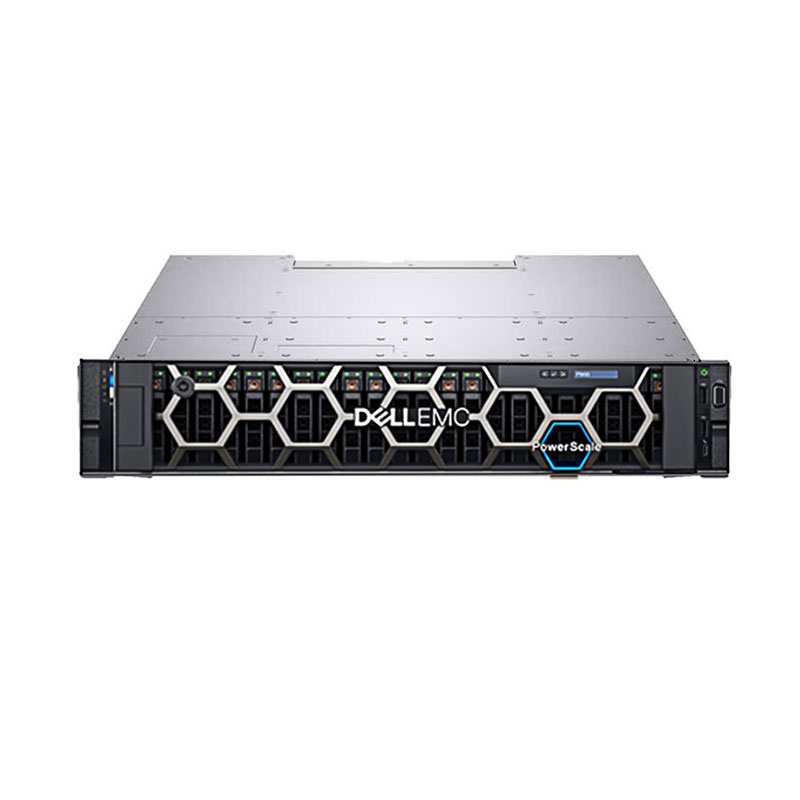
Enterprise deployments demonstrate that QLC hybrid configurations maintain 100,000+ IOPS during peak loads—far exceeding HDD performance—while drawing significantly less power. Finance clients running virtualization workloads and healthcare organizations managing big data analytics have successfully migrated from HDD arrays to tiered QLC storage without application performance degradation.
WECENT specializes in custom QLC configurations for Lenovo, HP ProLiant, and Dell PowerEdge servers integrated with tiered storage systems. By mapping workload IOPS profiles to appropriate storage layers during the consultation phase, WECENT ensures clients achieve guaranteed IOPS performance with reduced power consumption. Authorized partnerships with Huawei and Dell enable OEM customization—critical for system integrators and wholesalers deploying scaled solutions across multiple client sites.
What IOPS Optimization Tactics Maximize Green Storage ROI?
Key tactics include intelligent tiering algorithms, inline deduplication, workload-aware caching, and block-level compression. These mechanisms sustain data center storage IOPS during HDD-to-QLC transitions by automatically routing high-frequency access patterns to fast NVMe tiers while preserving capacity efficiency on QLC layers. Combined, these tactics typically reduce power draw by 35–45% while maintaining or improving throughput metrics.
Practical implementations leverage Dell PowerVault ME5012, ME5024, or equivalent Huawei arrays—systems purposefully designed to orchestrate multi-tier workload routing. Within these platforms, intelligent caching engines predict and prefetch frequently accessed blocks onto NVMe, reducing latency and power consumption relative to HDD seeks. Deduplication engines eliminate redundant data copies, compressing logical capacity and further reducing storage footprint power requirements.
For data center operators managing petabyte-scale repositories, these tactics deliver measurable IOPS improvements: a 100TB array can sustain 150,000+ random IOPS on a tiered QLC architecture versus 50,000 IOPS on equivalent HDD capacity—all at 40% lower power draw. WECENT’s consultation services work with IT teams to map existing workload profiles, identify optimization opportunities, and design tiered configurations validated against performance SLAs.
How Do You Calculate 40% Power Savings and Payback Timeline?
ROI calculation combines three components: electricity rate ($/kWh), annual energy consumption reduction, and capital expenditure for QLC hardware. Example: a 100TB HDD array consuming 800W continuously costs approximately $70,000 annually in electricity (at $10/kWh). Replacing with a 40TB QLC tier + 60TB cold-tier configuration consuming 480W reduces annual electricity spend to $42,000—a $28,000 annual saving. With $80,000 capex for QLC hardware, payback occurs in 34 months, after which the organization realizes pure OpEx reduction.
This model assumes industry-standard electricity pricing and HDD replacement cycles (5–7 years). Organizations in high-cost electricity regions (California, Europe, Asia-Pacific) see accelerated payback—often 18–24 months. Conversely, facilities with lower electricity rates may extend payback to 36–48 months but still achieve significant cumulative savings over the storage system lifetime.
WECENT provides ROI calculators and TCO analysis tools for procurement managers and system integrators, integrating real SKU pricing for Dell PowerVault, HP ProLiant, and Huawei arrays. These tools account for installation labor, maintenance contracts, and warranty terms—critical variables for accurate financial modeling. Authorized sourcing through WECENT ensures pricing reflects original, CE/RoHS-certified hardware with manufacturer warranty coverage, eliminating refurbished or gray-market risk premiums.
What Real-World Case Studies Prove Green Storage Success?
A major financial services firm deployed WECENT-sourced Dell PowerVault ME5 series storage to replace aging HDD arrays, achieving 42% power reduction and 15% IOPS improvement across virtualization environments. The deployment preserved all legacy data, maintained compliance with financial regulatory requirements, and paid back capex in 28 months through electricity savings alone.
Check: Storage Server
A healthcare organization managing electronic health records (EHR) and medical imaging data selected a Huawei storage array through WECENT to modernize its big data platform. The hybrid QLC architecture sustained 120,000+ IOPS for concurrent clinical workloads while cutting power consumption by 38%. Compliance with healthcare data residency and encryption requirements remained unchanged, while operational costs decreased by $45,000 annually.
For system integrators and wholesalers, WECENT’s global supply chain and OEM customization capabilities enable volume deployments across client portfolios. Integrators can confidently propose green storage audits to end customers, knowing WECENT provides certified hardware, installation support, and post-deployment optimization. This extends the integrator’s service value while ensuring client infrastructure modernization aligns with sustainability and financial objectives.
Why Choose WECENT for Authorized Green Storage Solutions?
WECENT operates as an authorized agent for Dell, Huawei, HP, Lenovo, Cisco, and H3C—ensuring all hardware is original, fully certified (CE/FCC/RoHS), and backed by manufacturer warranties. With 8+ years of focused enterprise server and storage infrastructure expertise, WECENT combines multi-vendor authority with deep technical knowledge of workload optimization, tiering architecture, and power efficiency strategies.
Key differentiators include consultation-to-support lifecycle services: initial audit and power profiling, workload mapping, hardware selection, installation, configuration, maintenance, and ongoing technical optimization. WECENT’s OEM customization capabilities enable wholesalers, system integrators, and brand owners to design tailored storage bundles for specific vertical markets—finance, healthcare, education, data centers—with low minimum order quantities.
For IT procurement managers, WECENT provides authorized sourcing with competitive pricing, fast lead times, and risk mitigation through original hardware guarantees. For system integrators, the partnership model delivers volume discounts, technical presales support, and post-deployment assistance. For data center operators, WECENT’s consultation services validate storage modernization decisions against sustainability metrics, IOPS requirements, and financial constraints—enabling confident capital allocation.
WECENT Expert Views
“Green storage audits are no longer optional for enterprises managing multi-petabyte repositories. The convergence of rising electricity costs, ESG reporting mandates, and QLC affordability creates a compelling business case for HDD-to-QLC migration. As an authorized agent for Dell and Huawei, WECENT helps wholesalers, integrators, and end customers quantify this opportunity through rigorous power profiling and ROI modeling. We’ve deployed solutions across finance, healthcare, and data center verticals—consistently achieving 35–45% power reductions while improving IOPS and simplifying operational complexity. For organizations hesitant about performance trade-offs, our tiered architecture recommendations and hybrid NVMe/QLC configurations eliminate that concern. The payback timeline—typically 24–36 months—makes green storage a no-regret investment in both sustainability and bottom-line cost control.”
Conclusion
A comprehensive green storage audit quantifies HDD power inefficiencies, maps workloads to high-capacity QLC alternatives, and validates 40% power savings potential without sacrificing enterprise IOPS requirements. Organizations across finance, healthcare, and data center sectors have successfully implemented this transition, achieving payback in 24–36 months while advancing ESG objectives.
WECENT’s authorized partnership with Dell, Huawei, HP, and complementary vendors positions the company as a trusted advisor for storage modernization. Through consultation, OEM customization, and full-lifecycle support—backed by original hardware warranties and competitive pricing—WECENT enables IT procurement managers, system integrators, and data center operators to execute green storage strategies with confidence. Contact WECENT for a free audit consultation and ROI modeling tailored to your infrastructure footprint.
Frequently Asked Questions
What makes QLC SSDs a green HDD alternative for enterprises?
High-capacity QLC SSDs reduce idle power draw from 8–10W to 2–4W per unit, cutting power-per-TB by 40%+ compared to traditional HDDs. Simultaneously, QLC delivers 50,000+ IOPS versus 200–500 on HDDs—enabling superior performance with lower energy consumption. WECENT supplies warrantied Dell and HP QLC models integrated into tiered architectures that maintain IOPS parity with legacy HDD deployments.
How does WECENT ensure IOPS performance during storage audits and migrations?
WECENT designs tiered storage architectures combining NVMe caching with QLC capacity tiers, ensuring high-frequency workloads route to fast tiers while maintaining capacity efficiency. Workload profiling during the consultation phase validates IOPS requirements against proposed configurations. Deployments in finance and healthcare have proven this model sustains or exceeds baseline performance while cutting power 35–45%.
Can wholesalers and system integrators obtain customized green storage bundles?
Yes. WECENT provides OEM customization for QLC and SSD configurations integrated with Dell PowerVault, HP ProLiant, and Huawei platforms. Low minimum order quantities, global supply chain logistics, and installation support enable integrators to scale green storage proposals across multiple customer sites. Authorized sourcing ensures pricing competitiveness and warranty coverage.
What is the typical ROI timeline for HDD-to-QLC storage migration?
Most organizations achieve payback in 24–36 months through electricity savings. A 100TB migration typically saves $25,000–$35,000 annually depending on regional electricity rates. Use WECENT’s ROI calculator to model payback based on your specific power consumption, capex, and facility electricity costs.
Are WECENT’s green storage products ESG-compliant and certified for enterprise use?
All products are original, fully certified (CE/FCC/RoHS), and backed by manufacturer warranties. WECENT’s authorized sourcing from Dell, Huawei, and HP ensures compliance with enterprise regulatory, security, and sustainability requirements. Hardware certifications support Sustainability-as-a-Metric initiatives and ESG reporting frameworks.